
Distinguished Professor Emeritus · UC San Diego
Larry Smarr
Fifty-five years at the frontier of general relativity, supercomputing, cyberinfrastructure, and the quantified self.
Fifty-five years at the frontier of general relativity, supercomputing, cyberinfrastructure, and the quantified self.
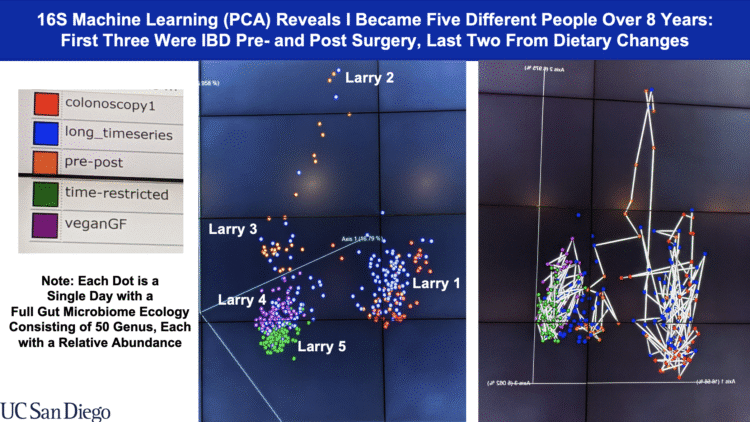
Since 2010, an eight-year longitudinal study of a single human gut microbiome — mine — has produced one of the densest self-quantification datasets in medicine.
Five distinct microbial "selves," separated by inflammatory bowel disease onset, surgery, dietary intervention, and time-restricted eating. Each dot in the analysis represents a single day; each cluster, a chapter in a life measured continuously.
Read the essay →From gravitational-wave simulations at Harvard to gut-microbiome longitudinal studies at UC San Diego — a career traced through the tools we build to see farther.
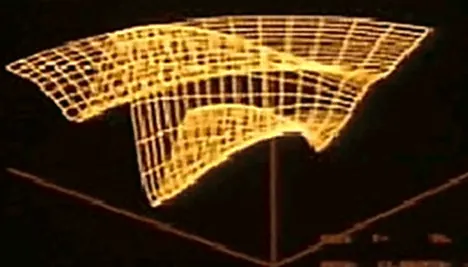
Numerical simulation of black-hole collisions and gravitational-wave sources.
59 items
Computational cosmology, cluster cores, and large-scale structure.
33 items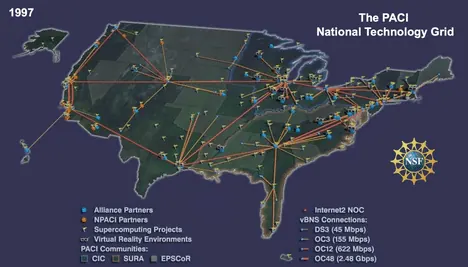
Founding NCSA, seeding Mosaic, OptIPuter, Calit2, and the distributed research platforms.
384 items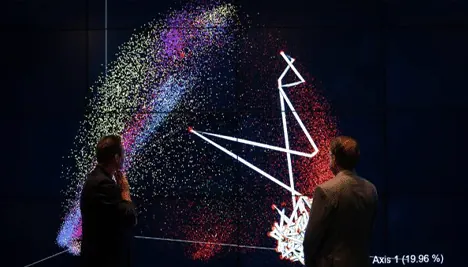
Longitudinal self-quantification and microbiome dynamics.
151 items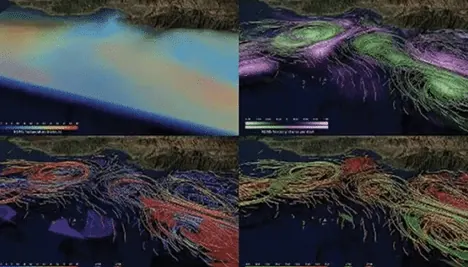
WIFIRE, green computing, and carbon-constrained internet.
65 items
Founding director of the National Center for Supercomputing Applications at the University of Illinois — the birthplace of the modern web browser.
An eight-year longitudinal analysis revealing five distinct microbial "selves" separated by IBD onset, surgery, dietary intervention, and time-restricted eating.
Watch talk →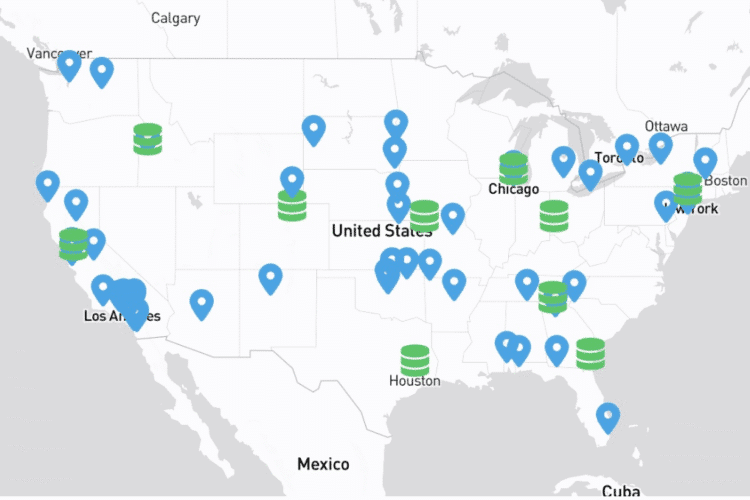
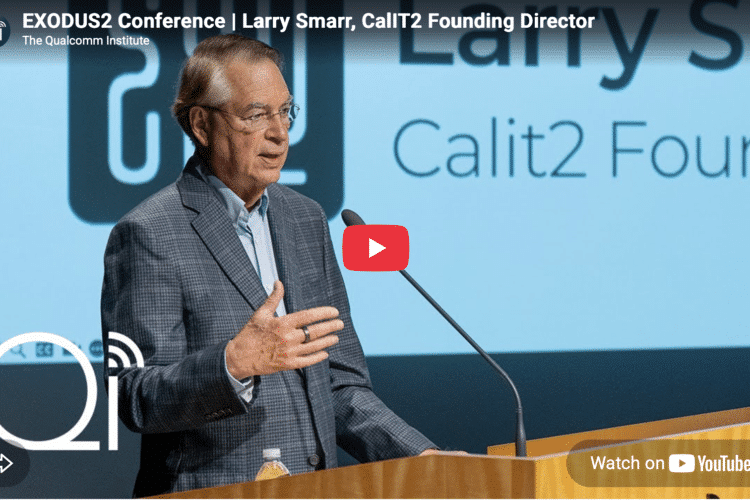
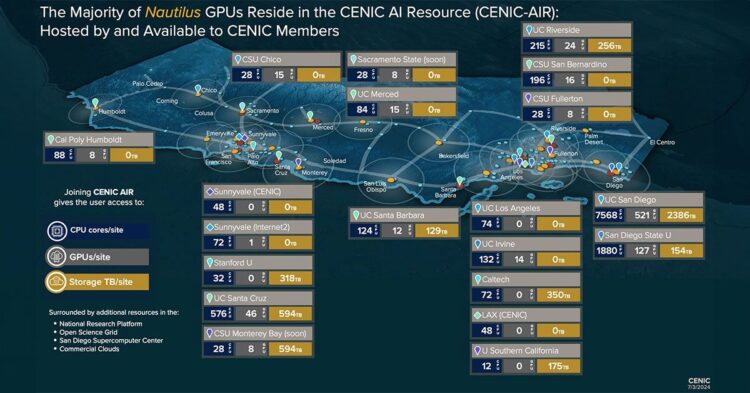
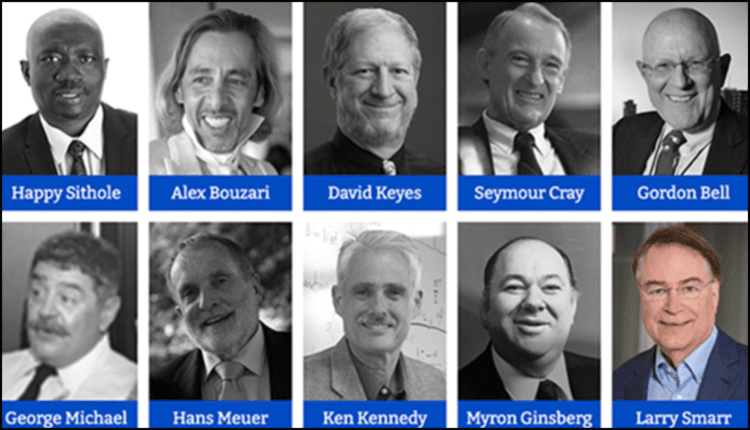
Larry Smarr holds the title of Distinguished Professor Emeritus at UC San Diego in the Department of Computer Science and Engineering, at the Jacobs School of Engineering.
He was Founding Director of the California Institute for Telecommunications and Information Technology (Calit2) from 2000 to 2020; Founding Director of the National Center for Supercomputing Applications at the University of Illinois Urbana-Champaign from 1985 to 2000; and Founding Director of the National Computational Science Alliance from 1997 to 2000.
In 2006 he received the IEEE Computer Society Tsutomu Kanai Award for his lifetime achievements in distributed computing systems, and in 2014 the Golden Goose Award. He served on the NASA Advisory Council to four NASA Administrators, was chair of the NASA Information Technology Infrastructure Committee, and the NSF Advisory Committee on Cyberinfrastructure, and for eight years was a member of the NIH Advisory Committee to the NIH Director, serving three directors.


