108items
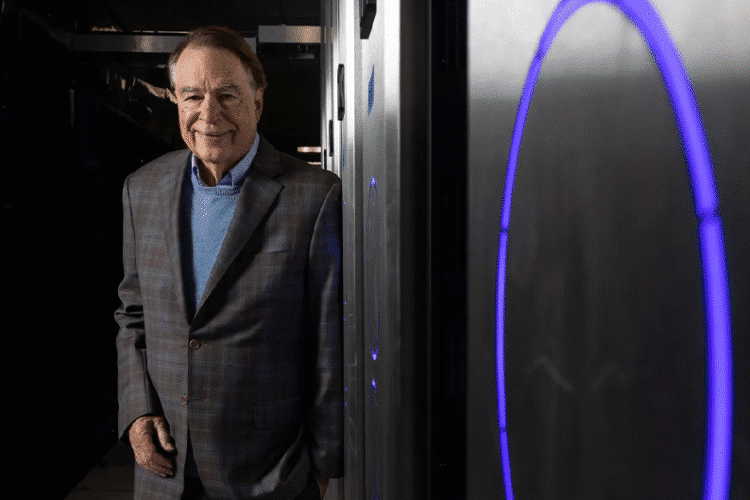
San Diego universities forge ahead with optimism and anxiety to shape new AI-literate workforce – San Diego Union-Tribune
San Diego’s colleges and universities are offering programs in artificial intelligence to make graduates competitive in the new workforce.
IEEE Computer Society Announces 2025 Class of Fellows
The grade of IEEE Fellow recognizes exceptional distinction in the engineering profession. The IEEE Board of Directors elevated Larry Smarr to the 2025 Fellow status for contributions to supercomputing and metacomputer cyberinfrastructure.
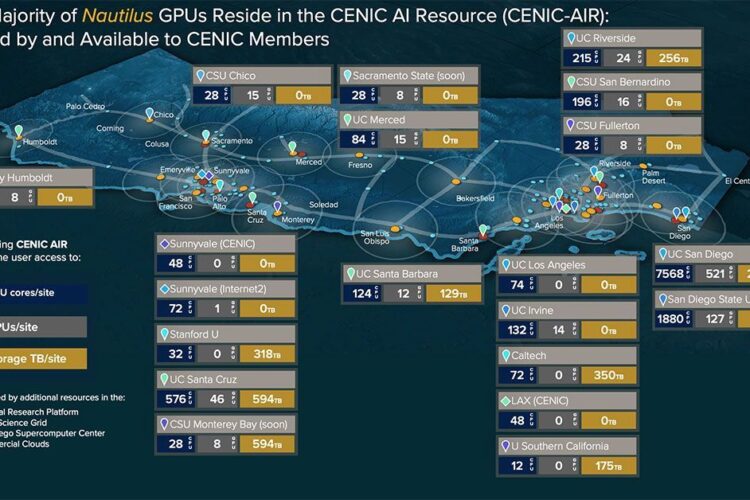
San Diego Supercomputer Center and CENIC Work to Expand AI Education Infrastructure in California – UC San Diego Today
The San Diego Supercomputer Center (SDSC) at UC San Diego and the Corporation for Education Network Initiatives in California (CENIC) have developed a prescient AI education infrastructure called CENIC AI Resource (CENIC AIR) for K-12 education, public libraries, community colleges, the California State University (CSU) and the University of California (UC) campus systems.
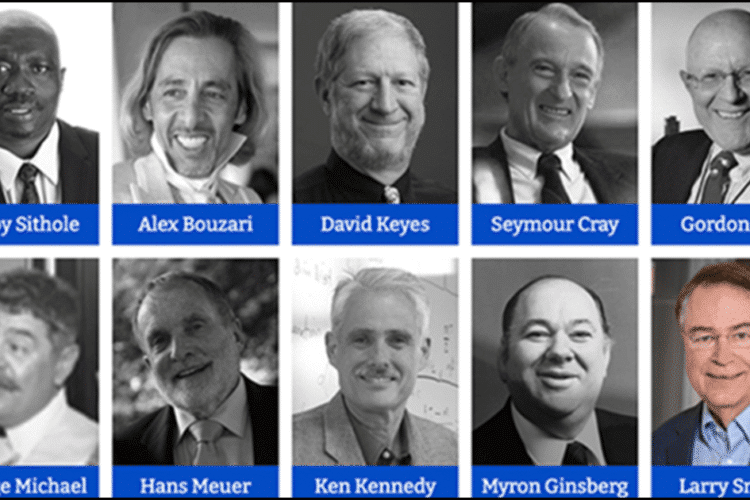
35 HPC Legends 2024 – Founding Director of NCSA – HPC Wire
The proposal was the first unsolicited submission to be approved by the NSF and led to the founding of four supercomputing centers: Cornell, Illinois, Princeton, and San Diego, with a fifth, Pittsburgh, established later.
Homecoming – NCSA
Larry Smarr, NCSA’s founder, recently came home to NCSA to give a talk on his journey from founding the Center to his work with the National Research Platform (NRP). Smarr was on campus to accept an honorary Ph.D. in computer science at the University of Illinois Urbana Champaign (UIUC) during this year’s commencement.
NCSA Welcomes Back Larry Smarr to Share Insights on Nationwide Cyberinfrastructure Development – HPC Wire
May 3, 2024 — High-Performance Computing (HPC) luminary and NCSA founding director Larry Smarr will be returning to the Center to give a talk titled “From NCSA to the National Research Platform” on May 9 at 12 p.m. in the NCSA auditorium on the first floor.
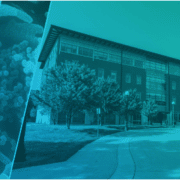
NCSA Reflects on 35 Years as a Supercomputing Powerhouse
But 1986 did have some bright spots. IBM introduced the world’s first laptop computer. Author and humanitarian Elie Wiesel won the Nobel Peace Prize. And the National Science Foundation established the National Center for Supercomputing Applications as part of its Supercomputer Centers Program.

From Coffee Cart to Educational Computing Platform – UCSD News
In classic UC San Diego fashion, an overheard conversation at a campus coffee cart has turned into an interdisciplinary project that’s making computing-intensive coursework more exciting while saving well over one million dollars so far.
SC21: Larry Smarr on The Rise of Supernetwork Data Intensive Computing – HPC Wire
November 26, 2021 – At SC21 last week, Smarr delivered a racing reprise of this (ongoing) HPC tour de force in his talk, The Rise of Supernetwork Data Intensive Computing. Presented here are a sampling of his comments (lightly edited) and quite a few of his slides.
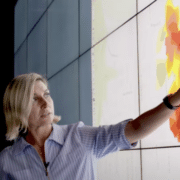
Professor de Callafon helps build cyber-infrastructure to aid wildfire hazard assessment and response – MAE News
The system will integrate networked observations such as heterogeneous satellite data and real-time remote sensor data, with computational techniques in signal processing, visualization, modeling, and data assimilation to provide a scalable method to monitor such phenomena as weather patterns that can help predict a wildfire’s rate of spread.
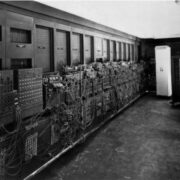
ENIAC at 75: Celebrating the World’s First Supercomputer – HPC Wire
With little fanfare, today’s computer revolution was arguably born and announced through a small, innocuous, two-column story at the bottom of the front page of The New York Times on Feb. 15, 1946.

Larry Smarr: The Future of Distributed Computing Is Here – HPC Wire
August 25, 2020 Larry Smarr may have stepped back from full-time work in the Computer Science and Engineering Department at the University of California, San Diego, but that doesn’t mean he’s slowing down.
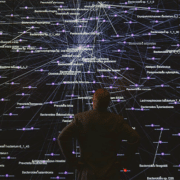
Pioneering Scientist and Innovator Larry Smarr Retires – HPC Wire
June 13, 2020 – During these two decades, Smarr grew the two-campus Calit2 into a collaborative discovery system that engaged hundreds of faculty, staff, students, and companies.
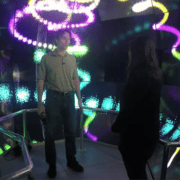
Qualcomm Institute’s Virtual Reality Cave Offers 3D Experience – KPBS Science
Researchers at the Qualcomm Institute at UC San Diego are commemorating the second year of the Suncave. KPBS Science and Technology reporter Shalina Chatlani took advantage of the occasion to do some high-tech spelunking – or cave exploring.
▶ Video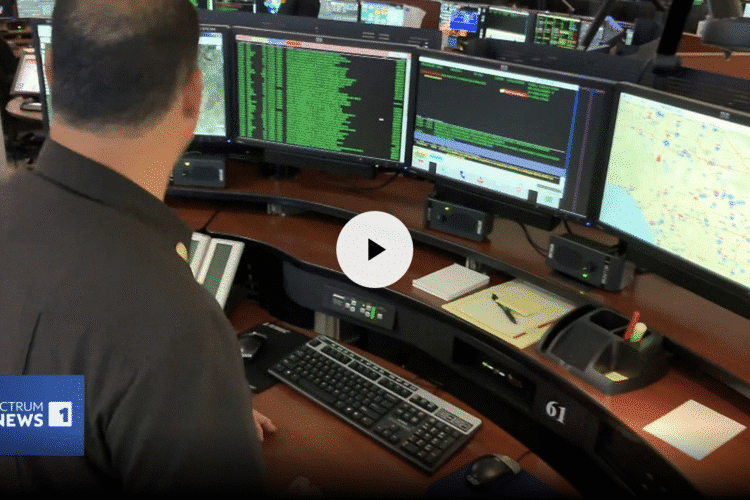
Firefighters Look to Supercomputers to Combat Wildfires – Spectrum News 1
“Just to imagine what kind of computations are taking place here. It’s mind-blowing,” Ilkay Altintas, Chief Data Science Officer at the San Diego Supercomputer Center, told Spectrum News 1.
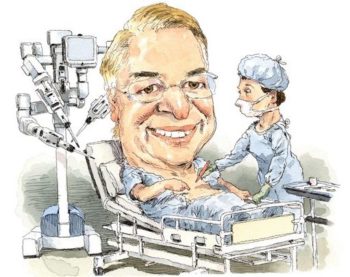
The Man Who Saw Inside Himself – The Atlantic
For years, Larry Smarr has used a supercomputer to monitor his health and peer at his organs. Recently, he used his knowledge to help direct his own surgery.
Technology Projects to Combat California Wildfires Are Recognized with CENIC Innovation Award
In recognition of work to bring advanced IT and telecommunications to the fight to contain California wildfires, the WIFIRE, HPWREN, and AlertTahoe projects have been selected as recipients of the CENIC 2018 Innovations in Networking Award for Experimental Applications.
Why Larry Smarr Is Pioneering Collaborative Innovation – Strategy+Business
Larry Smarr has become a vital conductor of innovation by insisting that scientists and researchers at the incubators he runs collaborate across the lines that separate disciplines.
NSF Project Sets Up First Machine Learning Cyberinfrastructure – HPC Wire
July 25, 2017 – Earlier this month, the National Science Foundation issued a $1 million grant to Larry Smarr, director of Calit2, and a group of his colleagues to create a community infrastructure in support of machine learning research.

The Quantified Patient Checks In – IEEE
Like eight-year-olds who can’t let go of a good joke, Larry Smarr’s nurses and doctors kept coming to him with the same question: “Have you passed gas yet?” Answering this question in the affirmative is, Smarr explains, deadpan, “the state of the art in 2017 in the medical community for deciding when your colon restarts”.
Larry Smarr Talks Machine Intelligence at Jackson State – HPC Wire
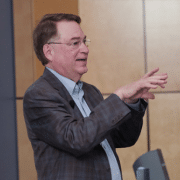
JACKSON, Miss., April 13, 2017 — Dr. Larry Smarr, physicist and Big Data thought leader, practices what he preaches.
Look twice, cut once – University of California News
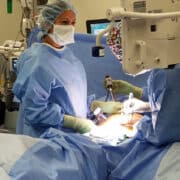
Before Sonia Ramamoorthy, M.D., chief of colon and rectal surgery at UC San Diego Health, took a scalpel to Larry Smarr, she first took a virtual tour of his large intestine. It encompassed an entire room.
▶ Video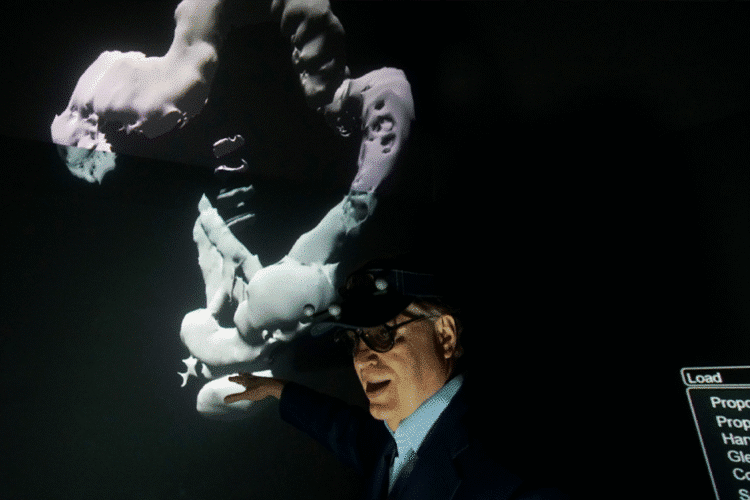
Welcome to my colon: A tech pioneer turns to virtual reality to guide his own surgery – STAT News
Spend enough time with Larry Smarr and, chances are, he’ll invite you to step inside his colon.
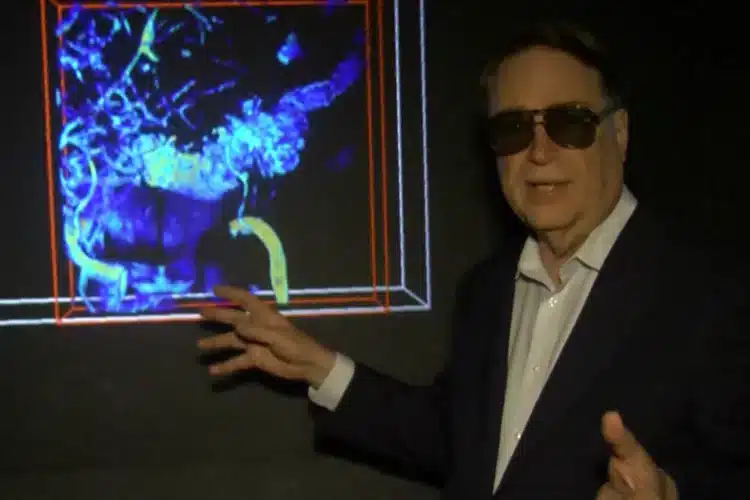
This UC San Diego Professor Planned His Surgery In Virtual Reality – KPBS
UC San Diego’s Larry Smarr is the kind of guy who wears a Fitbit, monitors his sleep and has had his DNA sequenced. But he takes the whole self-tracking thing farther than most. He has mapped his internal organs in three dimensions. He even has a 3-D printed model of part of his colon.
▶ Video
Teaching Computers to Recognize Unhealthy Guts – SDSC’s ‘Gordon’ Supercomputer Assists in New Microbiome Study
January 18, 2017 – A new proof-of-concept study by researchers from the University of California San Diego has succeeded in training computers to “learn” what a healthy versus an unhealthy gut microbiome looks like based on its genetic makeup.

Larry Smarr Helps NCSA Celebrate 30th Anniversary – HPC Wire
On Friday, Larry Smarr, whose unsolicited 1983 proposal to the National Science Foundation (NSF) begat NCSA in 1985 and helped spur NSF to create not one but five national centers for supercomputing, gave a celebratory talk at NCSA.
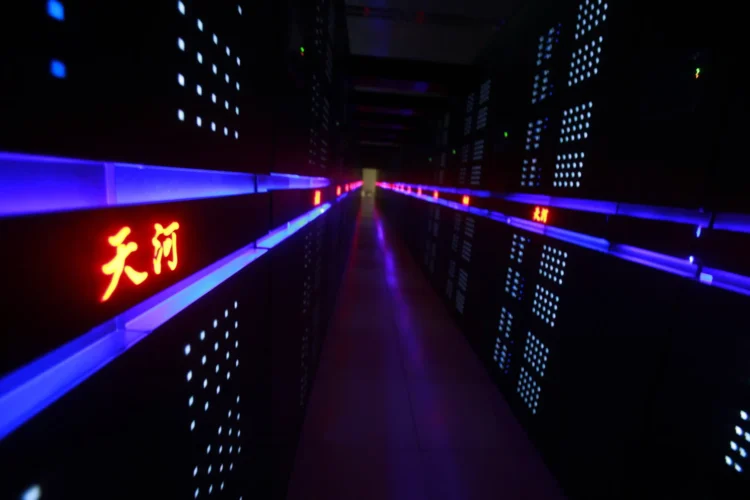
China Wins New Bragging Rights in Supercomputers – New York Times
Supercomputers are viewed in scientific circles as an indicator of national technology leadership, and they are vital for research in areas ranging from the development of new weapons and medicines, to the design of cars and consumer products.
A Public Infrastructure For Data Access – Quantified Self
Larry Smarr’s major contributions to scientific progress are well known. A physicist and the founding director of the National Center for Supercomputing Applications (NCSA), he helped bring the power of computing to scientific research at a time when computers will still highly specialized instruments.
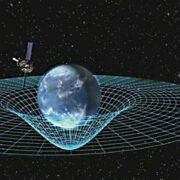
Leggo my LIGO – Smile Politely
After LIGO detected gravitational waves a few months ago (detected in September 2015 but announced in February 2016), LIGO and gravitational waves became almost household words. However, did you know that the revolutionary observations couldn’t have been made without the help of the U of I?

Cyber-archaeology, Big data and the race to save threatened cultural heritage sites – UC News
“People have been destroying material culture representations of their enemies for millennia,” said Thomas Levy, distinguished professor of anthropology at UC San Diego and director of the Center for Cyber-Archaeology and Sustainability at the Qualcomm Institute.
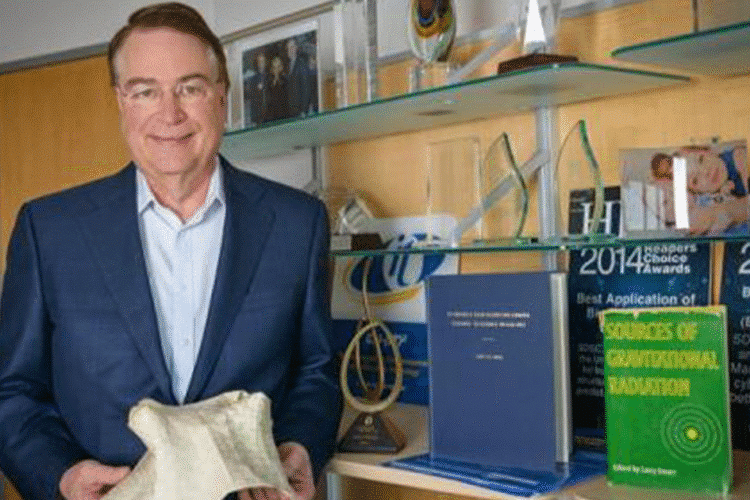
Gravitational Wave Discovery Echoes CSE Professor’s 1975 Dissertation – CSE News
In his doctoral dissertation at the University of Texas, Austin in 1975, CSE professor Larry Smarr developed a computational method for solving Albert Einstein’s equations of general relativity.

Gravitational Waves Detected! Historic LIGO Success Strikes Chord with Larry Smarr – HPC Wire
The event that created these particular gravitational waves – the spiraling of two black holes into each other about 1.3 billion light-years away (or 1.3 billion years ago)- was the most energetic event ever detected.
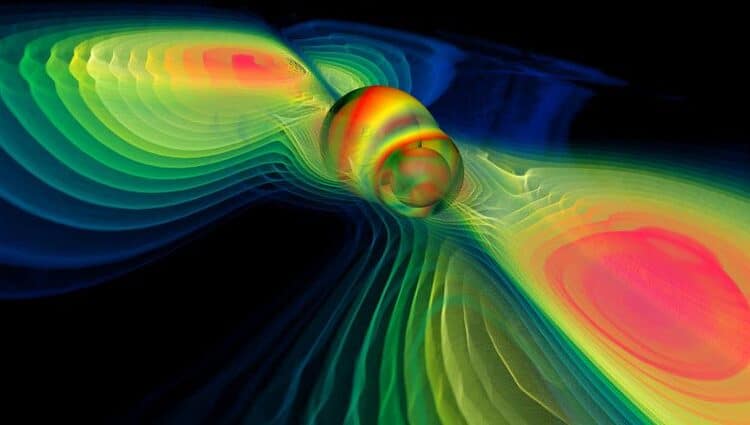
Gravitational Waves Detected 100 Years After Einstein’s Prediction – HPC Wire
Larry Smarr’s Ph.D. dissertation presaged the announcement of the first detection of gravitational waves created by a merger of two black holes 1.3 billion light-years away.
Larry Smarr on Solving the Big Data Challenge in HPC – HPC Wire
September 25, 2015 – Internet pioneer Larry Smarr once had a vision of bringing connected computers out of academia and into the consumer world. Today, he envisions a second virtual highway, one capable of delivering on the promise of big data by leveraging fiber optic networks to transmit data at speeds of 10 gigabits to 100 gigabits per second.

Larry Smarr: Building the Big Data Superhighway – Enterprise AI
Internet pioneer Larry Smarr once had a vision of bringing connected computers out of academia and into the consumer world. Today, he envisions a second virtual highway, one capable of delivering on the promise of big data by leveraging fiber optic networks to transmit data at speeds of 10 gigabits to 100 gigabits per second.
NSF Gives Green Light to Pacific Research Platform – HPC Wire
BERKELEY and LA MIRADA, Calif., Aug. 4 — For the last three years, the National Science Foundation (NSF) has made a series of competitive grants to over 100 U.S. universities to aggressively upgrade their campus network capacity for greatly enhanced science data access.
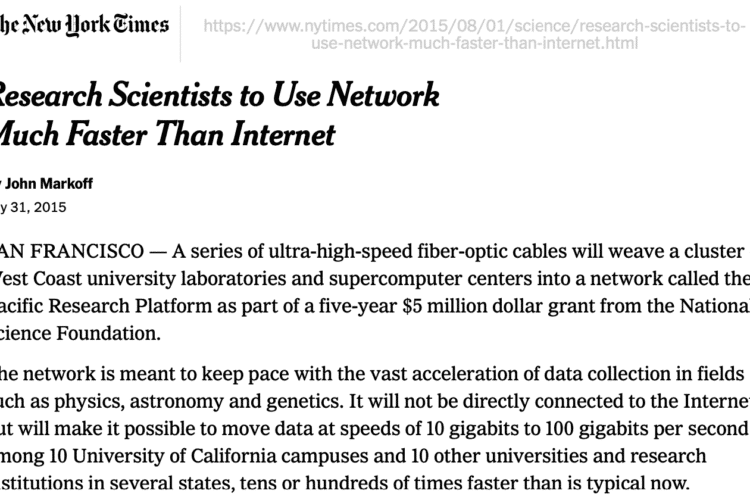
Research Scientists to Use Network Much Faster Than Internet – New York Times
A series of ultra-high-speed fiber-optic cables will weave a cluster of West Coast university laboratories and supercomputer centers into a network called the Pacific Research Platform as part of a five-year $5 million dollar grant from the National Science Foundation.
Health and data: can digital fitness monitors revolutionise our lives? – The Guardian
From granular microchips to voice analysis, health-tracking technology offers medical benefits but doubt persist about the quality and security of data gathered
Larry Smarr is the poster boy for wearable devices and the quantified self – The Sydney Morning Herald
May 10, 2015 Smarr, an astrophysicist and computer scientist, could be the world’s most self-measured man. For nearly 15 years, the professor at the University of California at San Diego has been obsessed with what he describes as the most complicated subject he has ever experimented on: his own body. Link to Article
The Revolution Will Be Digitized – Washington Post
Spearheaded by the flood of wearable devices, a movement to quantify consumers’ lifestyles is evolving into big business with immense health and privacy ramifications.

The Excrement Experiment – The New Yorker
But it was an inadvertent discovery in a stool analysis that led to Smarr’s Crohn’s diagnosis and, eventually, to a new calling: as an evangelist for an impending medical revolution, “quantified health.”

UC San Diego Achieves a Hat Trick with 2014 HPCwire Awards – JSOE News
The San Diego Supercomputer Center at the University of California, San Diego, has achieved a hat trick in garnering three awards for its university-wide WIFIRE project as part of the annual HPCwire Readers’ and Editors’ Choice Awards presented at the 2014 International Conference for High Performance Computing, Networking, Storage and Analysis (SC14), in New Orleans, Louisiana.

From Quantified Self to Personalized Medicine – HPC Wire
November 6, 2014 – The University of Washington Computer Science and Engineering Distinguished Lecture series recently welcomed Calit2 luminary Larry Smarr to speak on a very interesting topic, bringing wellness into the digital age.
What Cars Did for Today’s World, Data May Do for Tomorrow’s – New York Times
Today’s dominant industrial ecosystem is relentlessly acquiring and processing digital information. It demands newer and better ways of collecting, shipping, and processing data, much the way cars needed better road building. And it’s spinning out its own unseen businesses.
Firefighters get high tech to douse wildfires – PBS News
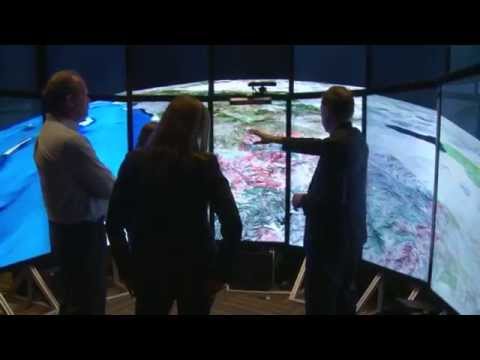
University of California San Diego computer scientists stitch together information from weather sensors and satellite images to predict where wildfires are moving in real time. All of the images and data is fed into a supercomputer and creates a network of real-time wildfire information. Their cyber infrastructure system, called WIFIRE, analyzes the information to forecast where the fire will move while it is burning.
▶ Video
Every Datum Tells a Story: The dawning of the age of meta-information – City Journal
computer and software experts gather at conferences to talk about how big and unprecedented the numbers are, how the concept of “big data” changes everything.

WIFIRE project helps firefighters get a jump on wildfires – UC News
Now, thanks to a multi-year, $2.65 million grant from the National Science Foundation (NSF), the University of California San Diego, and the University of Maryland have been building a cyberinfrastructure to better monitor, predict, and mitigate wildfires in the future.
Intelligence Too Big for a Single Machine – New York Times
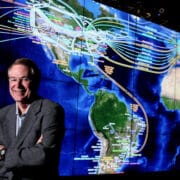
Ever since the computer scientist John McCarthy coined the term artificial intelligence in 1955, the field has gone through cycles of boundless optimism and sobering disillusion.
The Quantified Computer Scientist: Larry Smarr on the Future of Medicine – Vox
Cast across the screens are Smarr’s insides, or at least the closest you can get when breaking down the microbiology of a human body into data. There are some 150 variables in boxes color-coded against their divergence from the norm

Founding NCSA Director Receives Golden Goose Award – HPC Wire
Feb. 18 — Larry Smarr, a physicist whose work at the University of Illinois at Urbana-Champaign on calculating black hole collisions led him to champion a federal commitment to dramatically enhance U.S. computing power.

Collective Genius – The Art and Practice of Leading Innovation
Great leaders of innovation don’t fit the conventional mold of “good” leadership. They’re not visionaries who set direction and inspire others to follow. Instead, they create the context in which others are both willing and able to innovate. As one leader said, “My job is to set the stage, not to perform on it.”
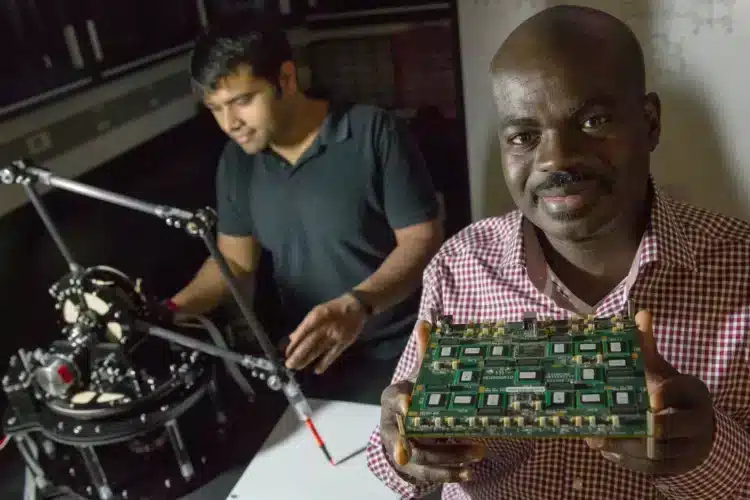
Brainlike Computers, Learning From Experience – New York Times
Computers have entered the age when they are able to learn from their own mistakes, a development that is about to turn the digital world on its head.
Digital Culture and the Future Internet – Center for the Humanities
The Institute develops next generation of information technologies, including optical networks, information visualization, and global telepresence.
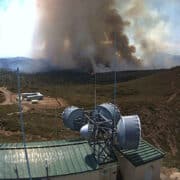
UC San Diego, UMD Researchers to Build ‘WIFIRE’ Cyberinfrastructure – UC San Diego Today
Three research organizations at the University of California, San Diego, have been awarded a multi-year National Science Foundation (NSF) grant to build an end-to-end cyberinfrastructure to perform real-time data-driven assessment, simulation, prediction, and visualization of wildfire behavior.
UC San Diego Library – Faculty File Q&A with Larry Smarr – Fall 2013
See pages 4 and 6
Building Mosaic – IEEE Computer Magazine
Charles Severance, University of Michigan – April 2013, pp. 6-8, vol. 46 IEEE Computer Magazine. (2013).
▶ Video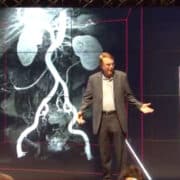
A Big Data Freeway for Scientists – New York Times
The University of California, San Diego, this week plans to announce that it has installed an advanced optical computer network that is intended to serve as a “Big Data freeway system” for next-generation science projects in fields including genomic sequencing, climate science, electron microscopy, oceanography and physics.

Larry Smarr: Where There Is Data There Is Hope – Quantified Self
“I never thought I would be getting into this business.” This is the first sentence in a mind-expanding talk by Larry Smarr about his self-tracking journey.
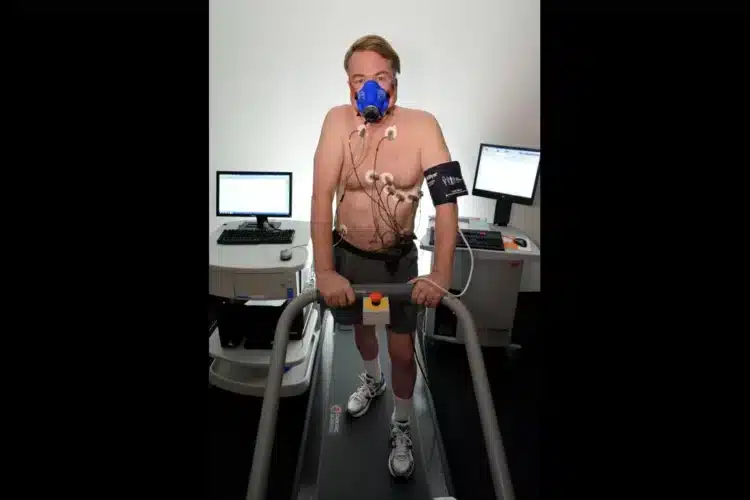
Tracking your body with technology – CNN
“I am trying to respect my doctor by doing my part of the homework,” said Smarr, 63, of La Jolla, California.

The Measured Man – The Atlantic
Larry Smarr, an astrophysicist turned computer scientist, has a new project: charting his every bodily function in minute detail. What he’s discovering may be the future of health care.
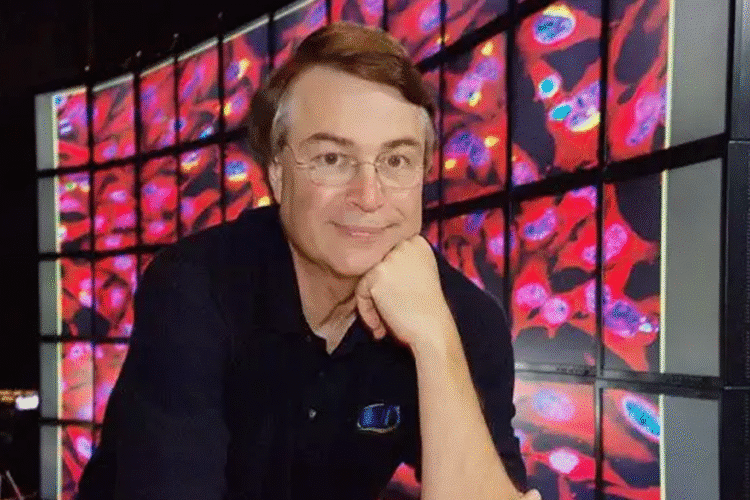
Computing pioneer Larry Smarr and his quantified self – BoingBoing.net
June 22, 2012 I have the opportunity to chat with Larry with some frequency as he’s on the advisory board of Institute for the Future where I’m a researcher. I’m always intrigued by Larry’s stories of his quantified self practices. For years, Larry has been examining his own body at a very high resolution by […]
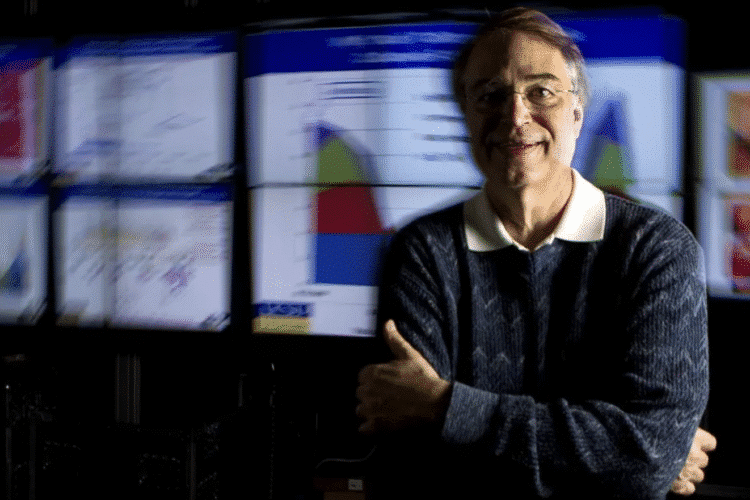
Innovator tracks everything his body does – San Diego Union-Tribune
“The bacteria in here contains more info than you’d find on a computer chip,” Smarr says. “It’s a window into your health. Within 10 years, people won’t dream of going to a doctor without first getting a sample like this.”
The Patient of the Future – MIT Technology Review
Internet pioneer Larry Smarr’s quest to quantify everything about his health led him to a startling discovery, an unusual partnership with his doctor, and more control over his life.

One Cloud to Rule Them All – HPC Wire
December 6, 2011 – Smarr’s theory begins with a simple premise: “Over the next 10 years, the physical world will become ever more overlaid with devices for sending and receiving information.”
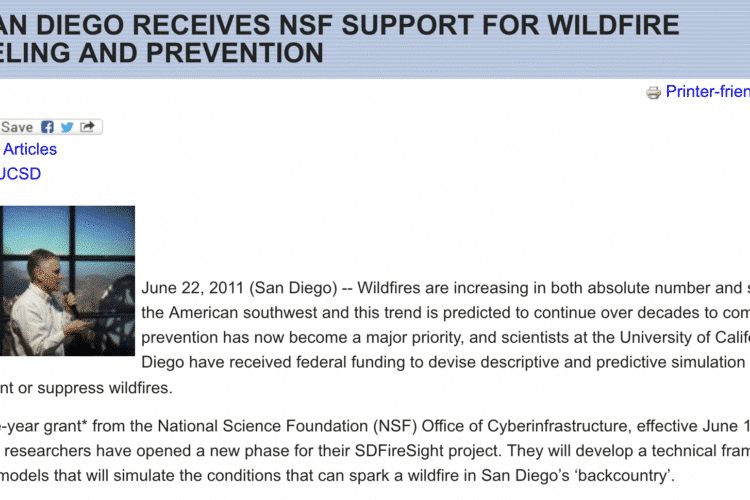
UC San Diego Recieves NSF Support for Wildfire Modeling and Prevention – East County Magazine
Wildfires are increasing in both absolute number and severity in the American southwest and this trend is predicted to continue over decades to come. Wildfire prevention has now become a major priority, and scientists at the University of California, San Diego have received federal funding to devise descriptive and predictive simulation tools to help prevent or suppress wildfires.
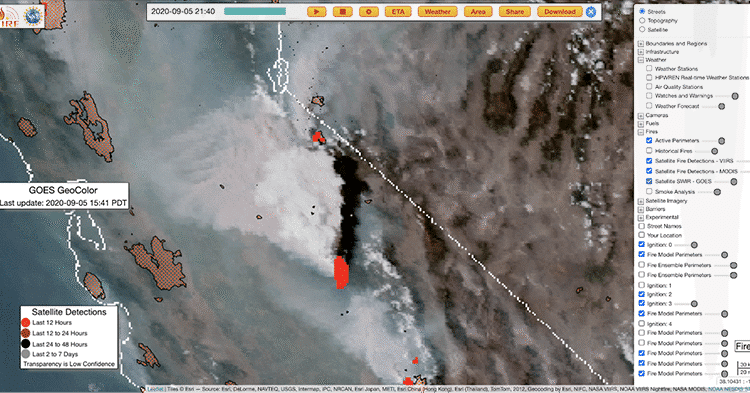
Wildfire Modeling and Prevention – Newswise
With a one-year grant* from the National Science Foundation (NSF) Office of Cyberinfrastructure, effective June 1, the UC San Diego researchers have opened a new phase for their SDFireSight project. They will develop a technical framework and computer models that will simulate the conditions that can spark a wildfire in San Diego’s ‘backcountry’.
Calit2 – Harvard Business School Case Study
Calit2 represented an experiment in inventing the university research environment of the future. From its inception in 2000, the Institute was envisioned as a catalyst that could fuel innovation and address large-scale societal issues by bringing together multidisciplinary teams of the best minds.
Digging Deeper, Seeing Farther: Supercomputers Alter Science – New York Times
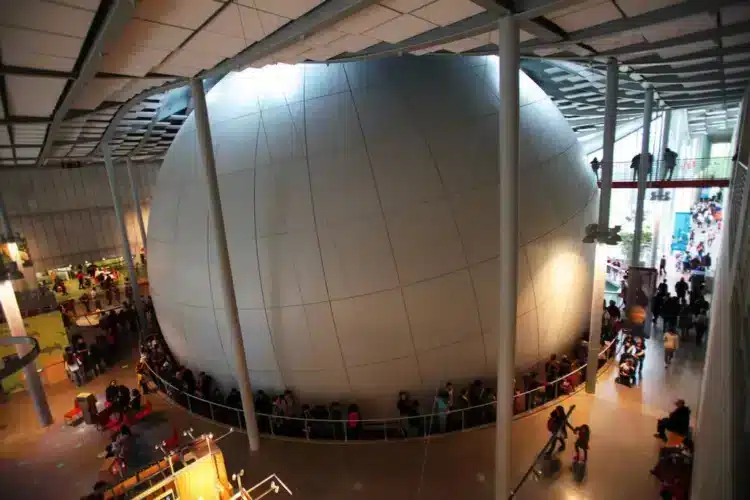
“Life: A Cosmic Journey,” a multimedia presentation now showing at the new Morrison Planetarium here at the California Academy of Sciences, relies not just on computer animation techniques, but on a wealth of digitized scientific data as well.
The Future of Broadband — in Tasmania – New York Times
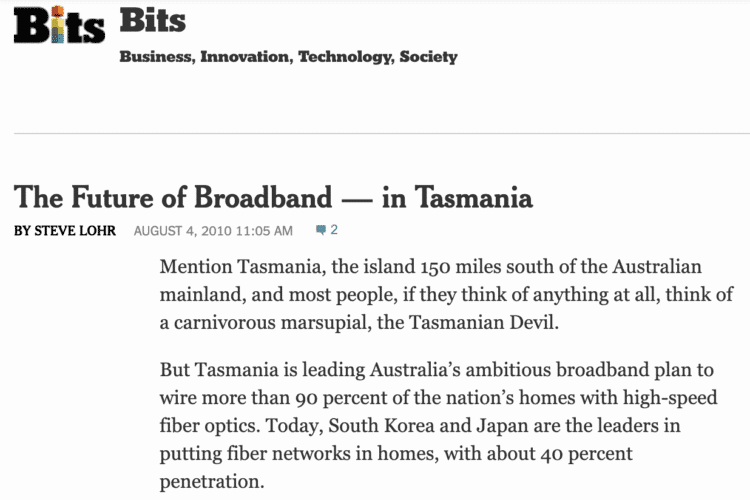
By 2013, Tasmania plans to have the hyper-speed broadband available to nearly all its 500,000 citizens — and the government is installing it without charging the users. The plan is for the rollout to be completed throughout Australia five to seven years.
The Good, the Bad and the Ugly: Reflections on the NSF Supercomputer Center Program – HPC Wire
In a position paper for community input at NSF’s Future of High Performance Computing Workshop in early December, Calit2 Director Larry Smarr reviewed the successes, failures and continuing challenges of the NSF supercomputing program that he helped create.

Calit2: Wireless health to drive preventative medicine – MobiHealthNews
Smarr said he’s pushing the digital transformation of healthcare along with similar transformations in energy, the environment and “our culture” itself.
NBN ‘breathtaking’ – The Political Flâneur
Larry Smarr, one of the early pioneers of the Internet, says “the Rudd Government’s announcement last month of a new broadband network is “breathtaking” and puts Australia at the forefront of government policy around the world embracing “intelligent infrastructure”.

US net pioneer hails Australian govt’s ‘breathtaking’ broadband network – Goldstein Report
Call him Kevin Rudd’s $ 43 billion man. Larry Smarr, a 60-year-old US physicist and one of the pioneers of the internet, says the Rudd Government’s announcement last month of a new broadband network is “breathtaking” and puts Australia at the forefront of government policy around the world embracing “intelligent infrastructure”, reports The Australian.
Project Aims To Improve Energy Efficiency Of Computing – ScienceDaily
The IT industry consumes as much energy and has roughly the same carbon “footprint” as the airline industry. Now scientists and engineers are building an instrument to test the energy efficiency of computing systems under real-world conditions — with the ultimate goal of getting computer designers and users in the scientific community to rethink the way they do their jobs.

UC San Diego’s GreenLight Project To Improve Energy Efficiency Of Computing – Photonics Online
The information technology industry consumes as much energy and has roughly the same carbon “footprint” as the airline industry. Now scientists and engineers at the University of California, San Diego are building an instrument to test the energy efficiency of computing systems under real-world conditions — with the ultimate goal of getting computer designers and users in the scientific community to re-think the way they do their jobs.
Optical Network Is Key to Next-Generation Research Cyberinfrastructure – HPC Wire
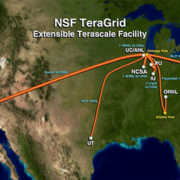
June 11, 2008 – At TeraGrid ’08 Conference, UC San Diego’s Smarr urges university campuses to remove network bottlenecks to supercomputer users
The Case For Faster Broadband: Professor Larry Smarr – StereoNET
The future of broadband in Australia is already a hot election issue, but a US analyst is warning today that the proposals being put forward by both the Government and the Labor Party will ultimately force a steep fall in living standards in Australia.
Launching the Global Community Cyberinfrastructure for Advanced Marine Microbial Research and Analysis (CAMERA) – JSOE News
Scientists and engineers at the University of California, San Diego and the J. Craig Venter Institute (JCVI) have flipped the virtual switch on the first cyberinfrastructure customized to serve the marine microbial metagenomics community.

CalViz Studio and New Optical Link Enable Smarr to Go ?Telepresent? to NCSA Industrial Meeting – QI News
This event was held during the 2006 NCSA Private Sector Program Annual Meeting. Smarr s participation demonstrated an early use of the optical link now in place between Calit2 and NCSA to enable the latter to be persistently coupled into the 10-Gbps optical fabric that Calit2, the National LambdaRail, and CENIC are building out.
Larry Smarr on the past and future of telepresence – Institute For The Future
At tonight’s Technology Horizons conference, Larry Smarr gave a terrific talk on the history and future of telepresence– i.e., systems that “eliminate distance between individuals who want to interact with other people and with other computers.” I’m a bit fuzzy– it was a long day, and tomorrow will be even longer– but a few notes.
Calit2: A Case Study in a Next-Generation Research Environment – EDUCAUSE
By Don Spicer – 2/8/2006 Abstract In higher education, team-based, collaborative research activities, call for new modalities and methods of investigation. Calit2 is responding to this challenge by creating a next-generation research environment that includes a range of technical and nontechnical systems to foster large-scale, multidisciplinary collaborations in innovative ways. This case study explores the […]

The OptIPuter Gets Real – HPC Wire
January 27, 2006 – Last week, the UCSD division of the California Institute for Telecommunications and Information Technology (Calit2) and the J. Craig Venter Institute announced that they would collaborate to decipher the genetic code of the world’s marine microbiological communities.
The Time Is Now: Bust Up the Box! – New York Times
For decades increases in the speeds of computer networks trailed the exponentially accelerating speed of microprocessor chips. Now the balance between the power of computer processing and networking has fundamentally reversed, and the rapid rise of transmission speeds is beginning to have a revolutionary impact on how computers are used and what they can do.

Real-Time HDTV Broadcast From USA To Japan Enabled By Advanced Networks – Phys.Org
Dignitaries and researchers attending the Japan Gigabit Network 2 (JGN2) Symposium in Osaka, Japan today listened and watched as Internet visionary Larry Smarr gave the keynote presentation on a large screen above the podium. Unlike traditional keynote talks, however, Smarr was 5,000 miles away in Seattle, Washington.

Smarr Touts Optical Networks As Nation’s Future – HPC Wire
November 11, 2004 – Smarr emphasizes the importance of networking to U.S. competitiveness and elaborates on his current projects and activities.
Interview with Larry Smarr, Cal-(IT)2 – HPC Wire
November 28, 2003 – I was here in Supercomputing ’00 and most years before then, but I hadn’t been to SC01 or 02. I’m very impressed with the scale of the exhibit and the balance that has come to the conference.
Larry Smarr, Internet’s grandfather, looking for an encore
In 1985, Larry Smarr started championing the construction of the first National Science Foundation (NSF) backbone, which connected the five NSF supercomputer centers in 1986.
CAL-(IT)2, UCSD Team with Bigbangwidth to Speed “OPTIPUTER” – HPC Wire
November 18- Researchers building a new type of Grid computing environment known as the OptIPuter have agreed to deploy BigBangwidth’s next-generation lightpath technology. The system will be installed at the University of California-San Diego (UCSD), and will act as an on-ramp for large data streams from high-performance workstations connected to packet-switched networks.
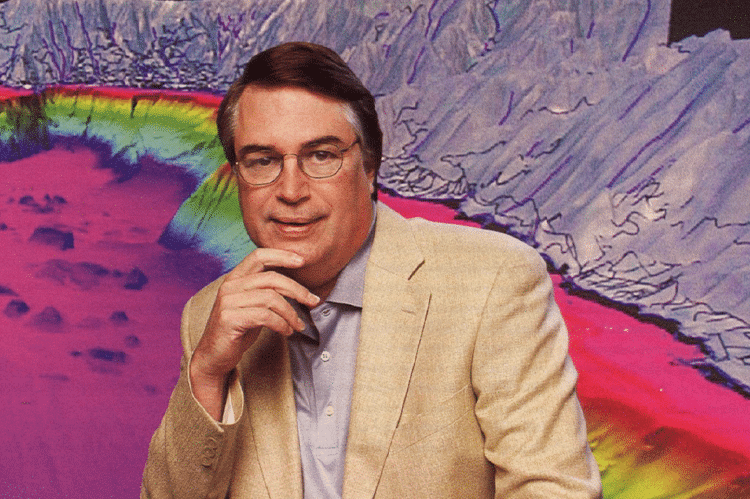
He sees IT coming – Mizzou Alumni Magazine
For decades, Larry Smarr has helped shape information technology that has given us the Internet, special effects for blockbuster movies and more.
Supercomputer To Utilize Optical Fibers – New York Times
Highlighting a radical departure in the design of the fastest computers, the California Institute for Telecommunications and Information Technology plans to announce on Monday that it will use an optical router designed by a Texas company as the heart of a campus-wide supercomputer that will be woven together with optical fibers.
The “OPTIPUTER”: A New Paradigm for Data Computing – HPC Wire
The National Science Foundation (NSF) awarded $13.5 million over five years to a consortium led by the University of California, San Diego (UCSD), and the University of Illinois at Chicago (UIC).
Planet Internet – MIT Review
Achievements to date: Internet backbone, Web browser. So when Larry Smarr takes the reins of a new $400 million institute and starts talking about intelligent highways and digital genomics, people listen.
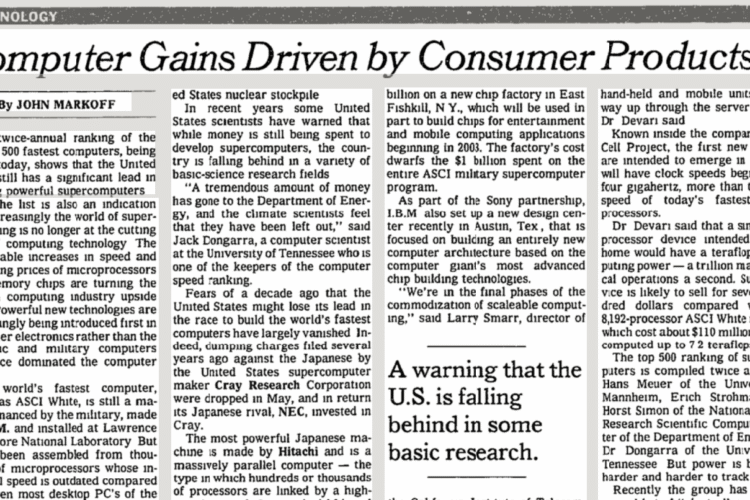
TECHNOLOGY; Computer Gains Driven by Consumer Products – New York Times
The twice-annual ranking of the world’s 500 fastest computers, being issued today, shows that the United States still has a significant lead in building powerful supercomputers.
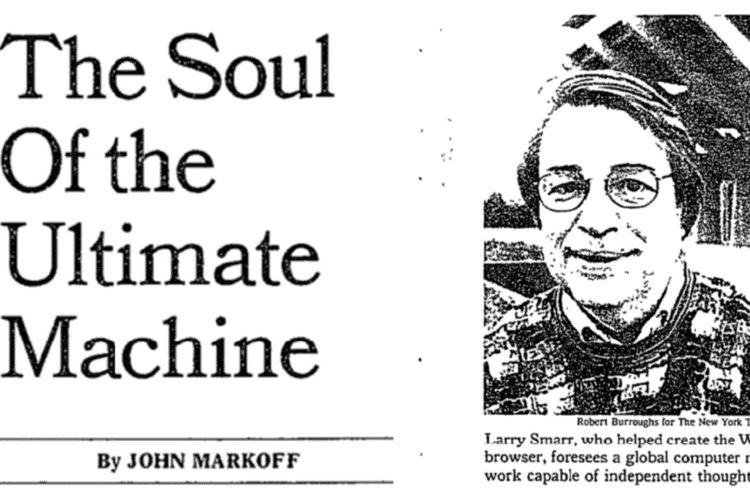
The Soul of the Ultimate Machine – New York Times
The Internet, he explained, is evolving into a single vast computer fashioned out of billions of interconnected processors. Then he went another step: ”The real question, from a software point of view, is: Will it become self-aware?”
Larry Smarr To Direct Cal-(IT)2 – HPC Wire
San Diego, CALIF. — Governor Gray Davis announced that the California Institute for Telecommunications and Information Technology [Cal-(IT)2], led by UC San Diego in partnership with UC Irvine, has been selected as one of three California Institutes for Science and Innovation.
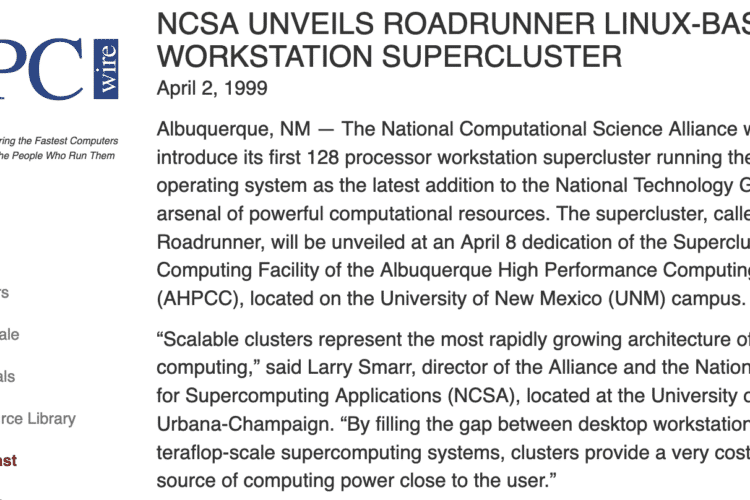
NCSA Unveils ROADRUNNER Linux-based Workstation Supercluster – HPC Wire
The National Computational Science Alliance will introduce its first 128 processor workstation supercluster running the Linux operating system as the latest addition to the National Technology Grid, its arsenal of powerful computational resources.
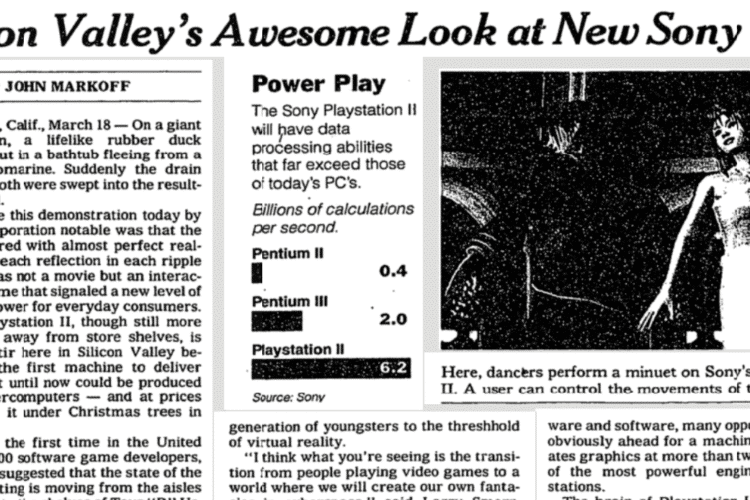
INTERNATIONAL BUSINESS; Silicon Valley’s Awesome Look at New Sony Toy – New York Times
Shown for the first time in the United States, to 1,000 software game developers, the machine suggested that the state of the art in computing is moving from the aisles of CompUSA to the shelves of Toys ”R” Us.

Social Scientists Pass Up Free Supercomputer Time – HPC Wire
September 11, 1998 – Social-science projects accounted for less than 1 per cent of the research last year at supercomputers financed by the National Science Foundation, says Larry Smarr, director of the National Center for Supercomputing Applications, at the University of Illinois at Urbana-Champaign.
JP Morgan Analyzes Risk Management on NCSA Origin2000 – HPC Wire
Champaign, IL — J.P. Morgan recently extended its risk management capabilities through the application of new mathematical models and advanced technology, JP Morgan and the National Center for Supercomputing Applications (NCSA) announced.
Military Gets Main Use of Big Computers – New York Times
At a time when the demand for supercomputers among American scientists far outstrips availability, the Federal Government is rapidly shifting its spending for the fastest and most powerful machines to weapons research.
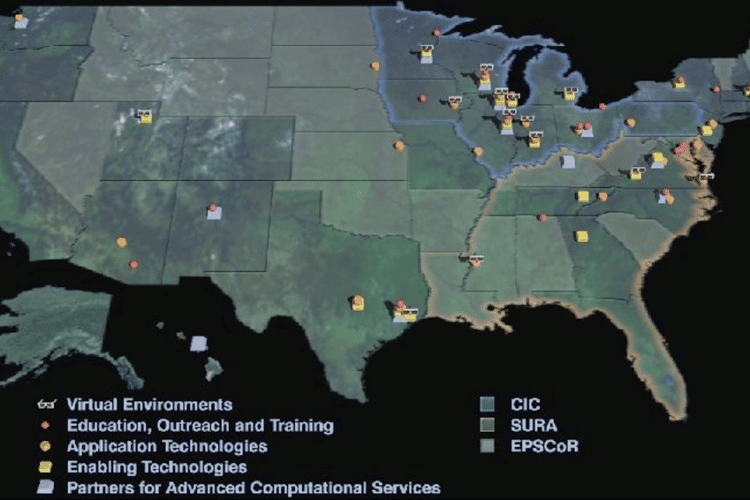
Alliance led by NCSA becomes a reality – HPC Wire
An alliance of researchers, industry, and educational leaders, linking more than 50 research partners across the country and led by the National Center for Supercomputing Applications (NCSA) at the University of Illinois at Urbana-Champaign (UIUC) becomes a reality October 1.
HPC in 1996 and 1997: An interview with Larry Smarr – HPC Wire
January 10, 1997 – Urbana-Champaign, Ill. — To further understanding of significant trends in high-performance computing at the juncture of a new year, HPCwire interviewed Larry Smarr, director of NCSA (National Center for Supercomputing Applications) about his view of the most important developments that have taken place in the industry during 1996 and those which might be anticipated in the 12 months ahead.
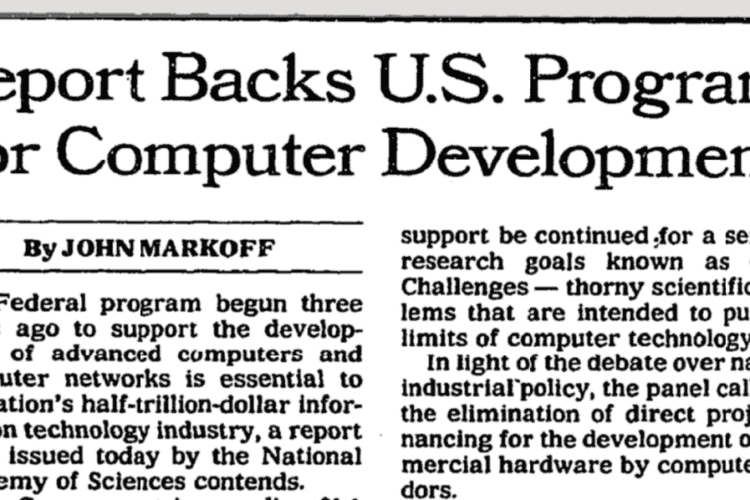
Report Backs U.S. Program For Computer Development – New York Times
A Federal program begun three years ago to support the development of advanced computers and computer networks is essential to the nation’s half-trillion-dollar information technology industry, a report to be issued today by the National Academy of Sciences contends.
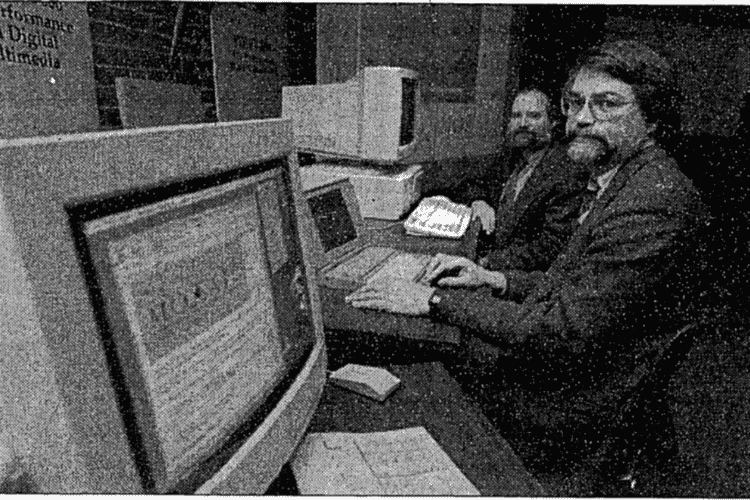
BUSINESS TECHNOLOGY; A Free and Simple Computer Link – New York Times
A new software program available free to companies and individuals is helping even novice computer users find their way around the global Internet, the network of networks that is rich in information but can be baffling to navigate.
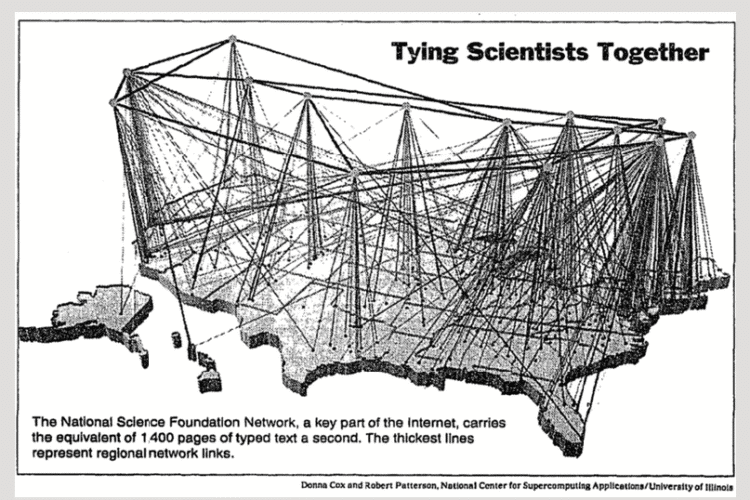
Doing Science on the Network: A Long Way From Gutenberg – New York Times
In science, as in many other realms, computer networks are having a revolutionary influence. In forging intimate new ties among researchers around the globe, the computer is rapidly replacing old intellectual traditions with new ways of doing science.
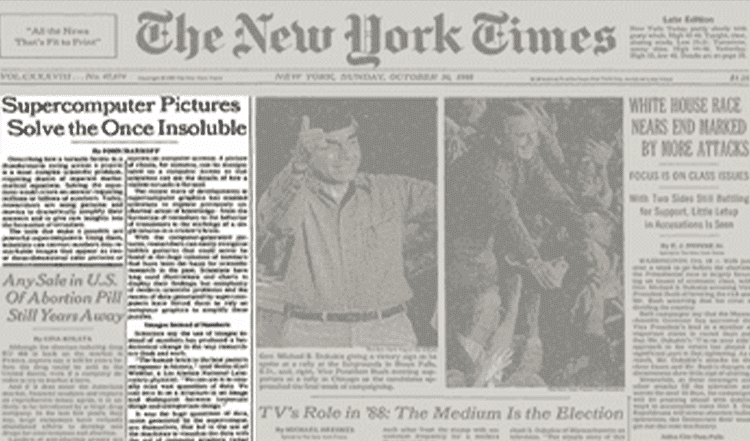
Supercomputer Pictures Solve the Once Insoluble – New York Times
The tools that make it possible are powerful supercomputers. Using them, scientists can convert numbers into remarkable images that appear as two-or three-dimensional color pictures or movies on computer screens.
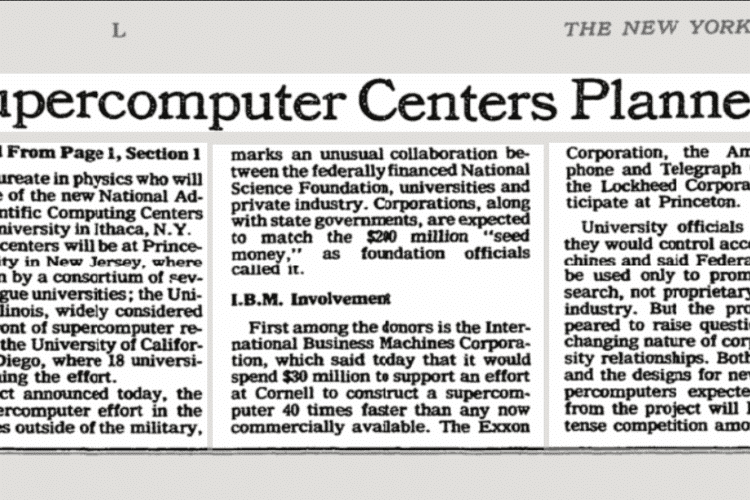
U.S. And Companies Set Campus Centers for Supercomputers – New York Times
The National Science Foundation said today that it would spend $200 million to create supercomputer centers at four of the nation’s leading universities. The move is the broadest Federal effort yet to promote research using advanced computer technology.
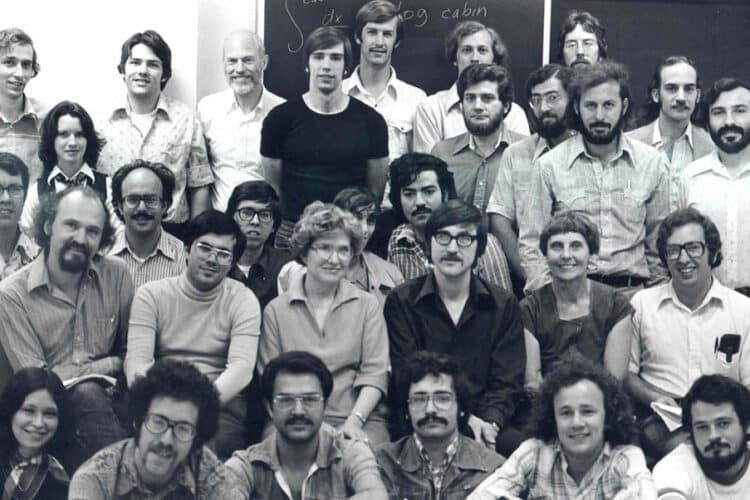
University of Texas – Center for Relativity
April 1, 1978 – The Center for Relativity began in 1962, under the direction of Alfred Schild. New Chair Harold Hanson conceived the idea of forming, within the Physics Department, centers of excellence.