I took my first graduate course in classical General Relativity in 1968, the same year the term “black hole” was coined. This early entry into the rapidly developing field enabled me to discover what is now termed the Smarr Mass Formula for black holes. I was also the first to determine the intrinsic curvature deformation caused by rotation in black holes. Although the numerical solution of strong-field perturbation theory of spherical and rotating black holes had been well developed, the solution of the Cauchy evolution by computational solution of partial differential equations required a number of Riemannian geometry innovations that my co-workers and I developed. At Harvard, I was able to work with their elementary particle group to compare field theoretic behavior of spin 1 and spin 2 (gravity) for self-attracting solutions, as well as help develop new spacecraft tests for general relativity. Working under the mentorship of general relativity and quantum gravity pioneer Bryce DeWitt, I helped found the field of numerical relativity by amalgamating techniques from differential geometry, general relativity, numerical analysis, and computer graphics and applying them to the two-body problem in general relativity in the form of the head-on collision of two black holes. This led to the first computation of the gravitational radiation from colliding black holes, which was observed 40 years later in 2015. With my students and colleagues, I also computationally investigated black hole dynamics, gravitational collapse, black hole/gravitational wave interactions, and black hole accretion.
Focus areas
Classical General Relativity
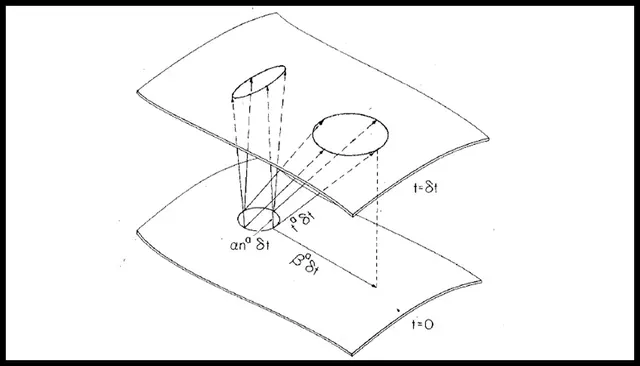
Analytic and foundational general-relativity work — spacetime structure, Kerr and Schwarzschild geometries, and strong-field theory.
9 items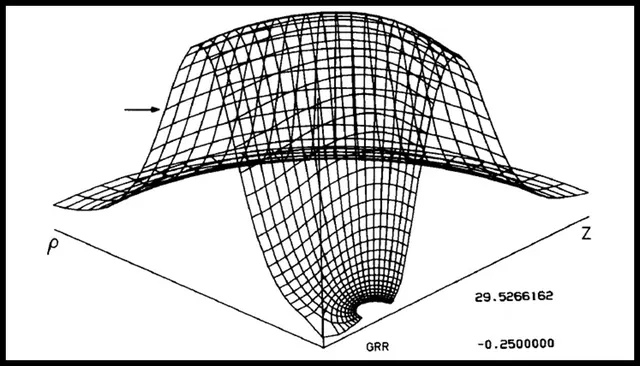
Numerical Black Hole Dynamics
Numerical relativity simulations of black-hole spacetimes — the foundation for computing merger waveforms.
19 items
Gravitational Radiation
Gravitational waveforms, detector science, and gravitational-radiation sources.
8 items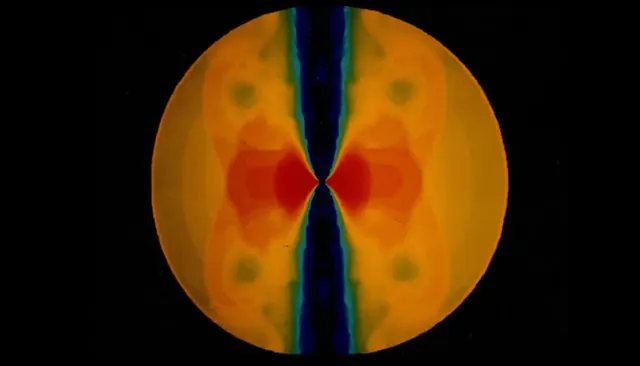
Black Hole Accretion
Accretion flows, jets, and hydrodynamic disks around compact objects.
7 items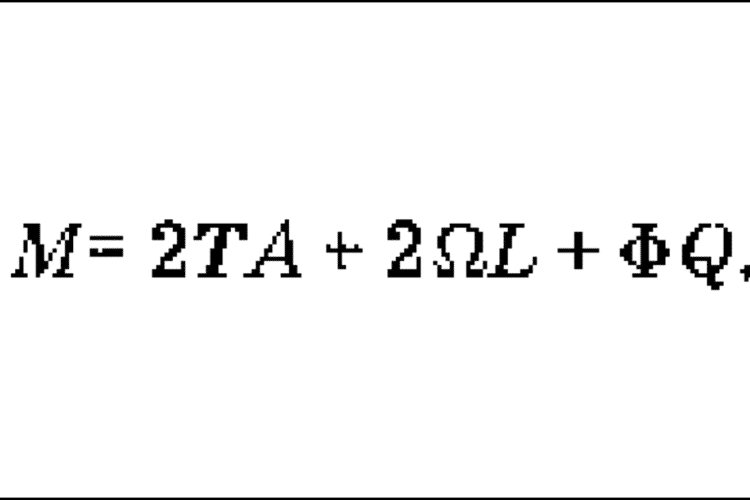
 publication
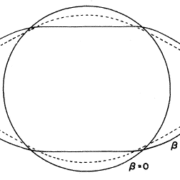
Surface Geometry Of Charged Rotating Black Holes
L. Smarr, Physical Review D7, 289-295. (1973).
 publication
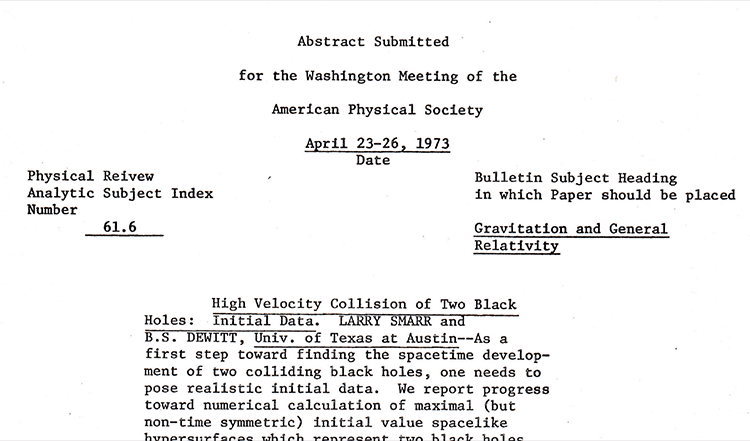
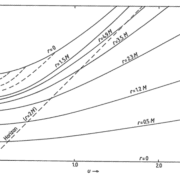
High Velocity Collision of Two Blackholes: initial Data
As a first step toward finding the spacetime development of two colliding black holes, one needs to pose realistic initial data. We report progress toward numerical calculation of maximal (but non-time symmetric) initial value spacelike hypersurfaces which represent two black holes colliding head-on with arbitrary closing velocity.
 publication
Maximally Slicing a Black Hole
F. Estabrook, H. Wahlquist, S. Christensen, B. DeWitt, L. Smarr and E. Tsiang, Physical Review D7, 2814-2817, (1973).
 publication
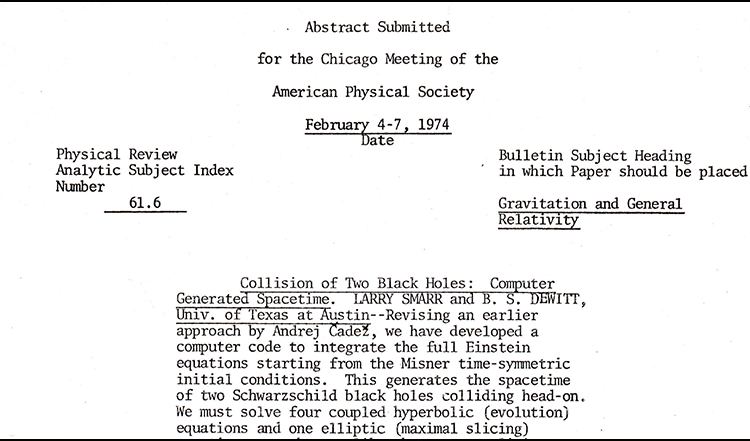
Collision of Two Black Holes: Computer Generated Spacetime
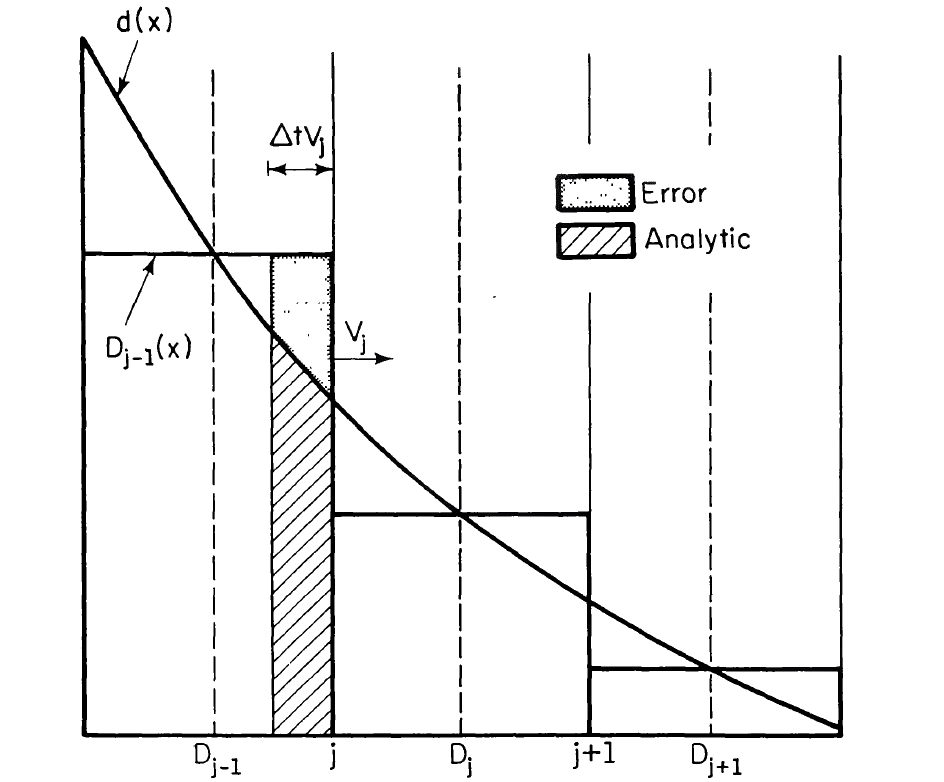
Revising an earlier approach by Andrej Cadez, we have developed a computer code to integrate the full Einstein equations starting from the Misner time-symmetric initial conditions.
 publication
The Structure of General Relativity with a Numerical Illustration: The Collision of Two Black Holes
L. Smarr Ph.D. Dissertation, University of Texas at Austin (1975). Ph.D. Advisor Bryce S. DeWitt (Deceased).
 presentation
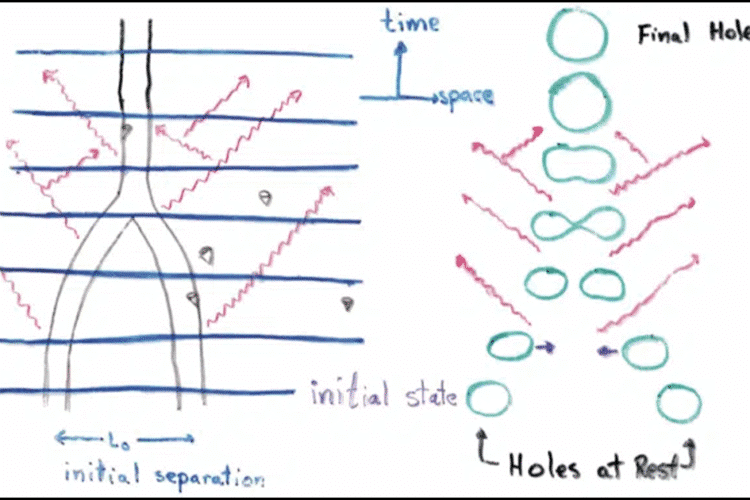
The Collision of Two Black Holes Presentation
Scanned transparencies from various speaking engagements between 1975-1978
 publication
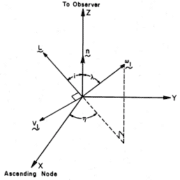
The Binary Pulsar — Physical Processes, Possible Companions, And Evolutionary Histories
L. Smarr and R. Blandford, Astrophysical Journal, 207, 574-588 (1976).
 publication
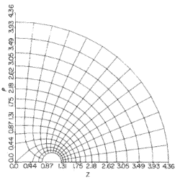
Collision of Two Black Holes: Theoretical Framework
L. Smarr, A. Cadez, B. DeWitt, and K. Eppley, Physical Review D14, 2443-2452. (1976).
 publication
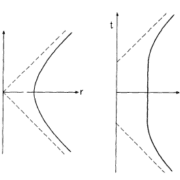
Are There Geon Analogues in Sourceless Gauge-Field Theories?
S. Coleman and L. Smarr, Comm. Math. Phys., 56, 1-9 (1977).
 publication
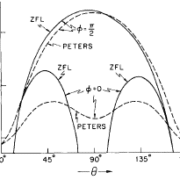
Gravitational radiation from distant encounters and from head-on collisions of black holes: The zero-frequency limit
L. Smarr, Physical Review D15, 2069-2077 (1977).
 publication
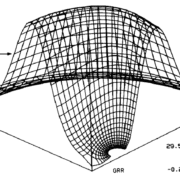
Spacetimes Generated By Computers: Black Holes With Gravitational Radiation
L. Smarr, Ann. N.Y. Acad. of Sciences, 302, 569-604 (1977).
 publication
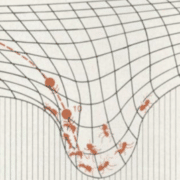
Our Elastic Spacetime: Black Holes And Gravitational Waves
L. Smarr and W. H. Press American Scientist, 66, 72-79 (1978).
 media
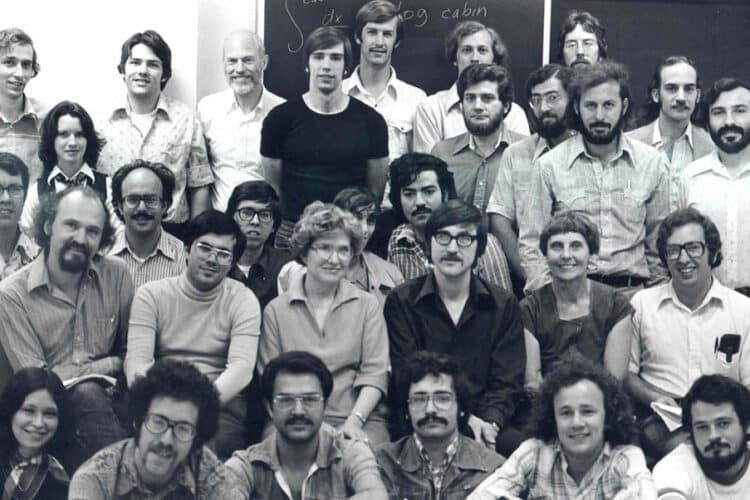
University of Texas – Center for Relativity
April 1, 1978 – The Center for Relativity began in 1962, under the direction of Alfred Schild. New Chair Harold Hanson conceived the idea of forming, within the Physics Department, centers of excellence.
 publication
Radiation Gauge in General Relativity
L. Smarr and J. W. York, Jr., Physical Review D17, 1945-1956 (1978).
 publication
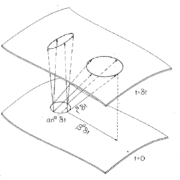
Kinematical Conditions in the Construction of Spacetime
L. Smarr and J. W. York, Jr., Physical Review D17, 2529-2551 (1978).
 publication
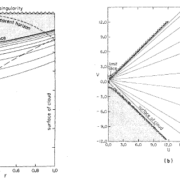
Time Functions in Numerical Relativity: I. Marginally Bound Dust Collapse
D. Eardley and L. Smarr, Physical Review D19, 2239-2259 (1979).
 publication
Sources Of Gravitational Radiation, Ed.
Edited by L. Smarr (Cambridge University Press) (1979).
 publication
General Relativistic Hydrodynamics: The Comoving, Eulerian, And Velocity Potential Formalism
L. Smarr, C. Taub, and J. R. Wilson, in Essays in General Relativity: A Festschrift for Abraham Taub, ed. F. Tipler, (Academic Press) (1980).
 publication
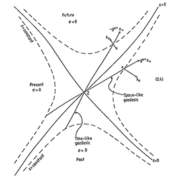
The Contributions of Bryce DeWitt to Classical General Relativity
Larry Smarr in Ahead of His Time: Bryce S. DeWitt. Essays on the Quantum Theory of Gravity in Honor of his 60th Birthday, 1984, ed. S. Christensen (Adam Hilger, Lmt.: Bristol, England).
 publication
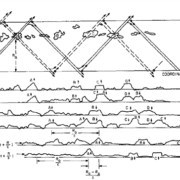
Gravitational waves and red shifts: A space experiment for testing relativistic gravity using multiple time-correlated radio signals
Gen. Rel. and Grav., 15, 129-163, with R. F. C. Vessot, C. A. Lundquist, R. Decker and T. Piran. (1983).
 publication
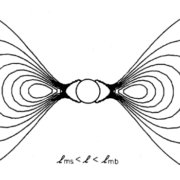
A Numerical Study of Nonspherical Black Hole Accretion. I. Equations and Test Problems
J. Hawley, J. R. Wilson, and L. Smarr, Astrophysical Journal, 277, 296-311 (1984).
 publication
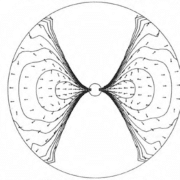
General Relativistic Hydrodynamics And Accretion Physics: A Numerical Approach
J. F. Hawley and L. Smarr, In Problems of Collapse and Numerical Relativity, 256-269,, ed. D. Bancel and M. Signore (Reidel: Dordrecht) (1984).
 publication
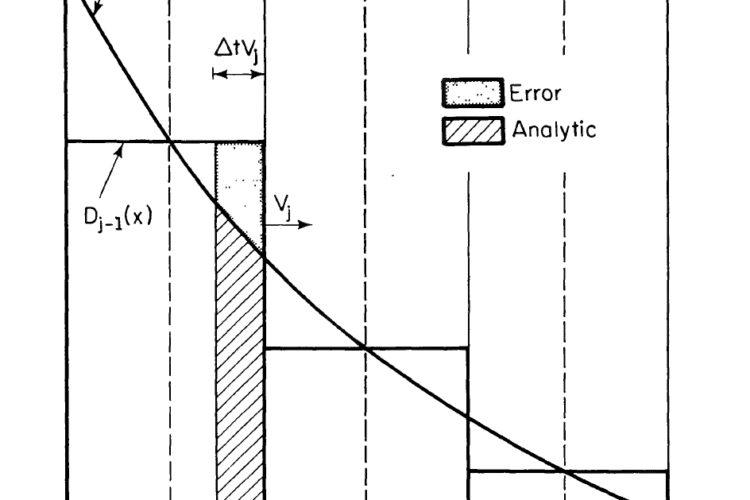
A Numerical Study of Nonspherical Black Hole Accretion. II. Finite Differencing and Code Calibration
J. Hawley, J. R. Wilson, and L. Smarr, Astrophysical Journal Suppl., 55, 211-246 (1984).
Numerical, Theoretical, and Astrophysical Relativity (Physics)
This project, under the direction Astronomy of Larry L. Smarr, Department of and physics, is entitled: “Numerical. Theoretical, and Astrophysical Relativity (Physics).”
 publication
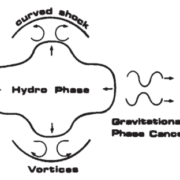
Computational Relativity: Numerical And Algebraic Approaches
In The Proceedings of the 10th International Conference on General Relativity and Gravitation, 163-183, ed. B. Berotti et al. (Reidel: Dordrecht). (1984).
 publication
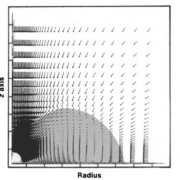
Numerical Models of Fat Disks: New Scenarios for Fluid Accretion into Black Holes
J. Hawley and L. Smarr, in Numerical Astrophysics, 30-51, ed. J. Centrella, J. LeBlanc, and R. Bowers (Jones and Bartlett: Boston) (1985).
 publication
General Relativistic Magnetohydrodynamics
J. H. Sloan and L. L. Smarr, in Numerical Astrophysics, 52-68, ed. J. Centrella, J. LeBlanc, and R. Bowers (Jones and Bartlett: Boston) (1985).
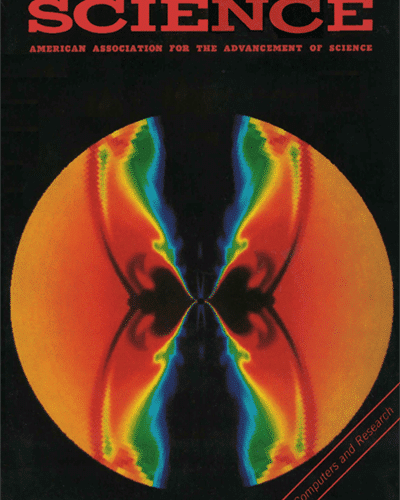 publication
An Approach to Complexity: Numerical Computations – Science Magazine
Science 26 Apr 1985: Vol. 228, Issue 4698, pp. 403-408 DOI: 10.1126/science.228.4698.403
 publication
Numerical Relativistic Gravitational Collapse with Spatial Time Slices
C.R. Evans, L.L. Smarr and J.R. Wilson, in Astrophysical Radiation Hydrodynamics, 481-519, ed. K.-H. Winkler and M. Norman (Reidel: Dordrecht) (1986).
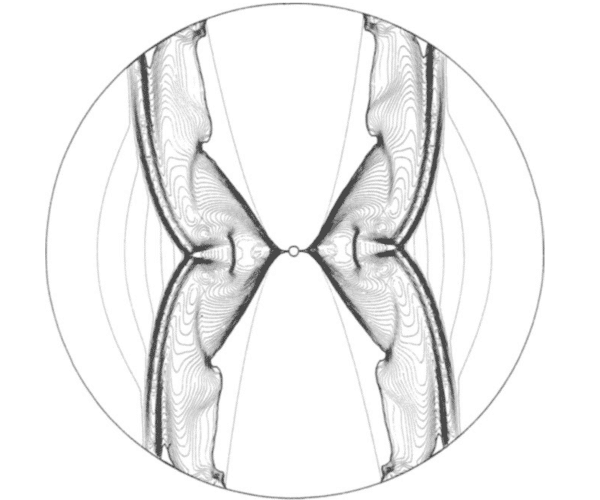 publication
New Paradigms For Black Hole Accretion From High-Resolution Supercomputer Experiments
J. F. Hawley and L. Smarr, in American Institute of Physics Conference Proceedings 144: Magnetospheric Phenomena in Astrophysics, 263-290, ed. R. I. Epstein and W. C. Feldman (American Institute of Physics: New York) (1986).
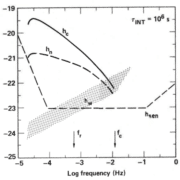 publication
Degenerate Dwarf Binaries as Promising, Detectable Sources of Gravitational Radiation
C. R. Evans, I. Iben, Jr., and L. Smarr, Astrophysical Journal, 323, 129-139 (1987).
 publication
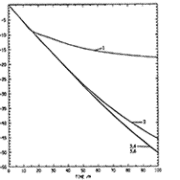
Black Hole Spacetimes: Testing Numerical Relativity
In Frontiers in Numerical Relativity, 57-73, 1989, ed. C. Evans, L. Finn, and D. Hobill (Cambridge University Press: Cambridge), with D. Bernstein and D. Hobill. (1989).
 publication
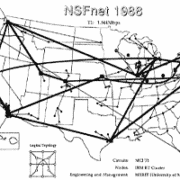
Supercomputing And Numerical Relativity: A Look At The Past, Present, and Future
In Frontiers in Numerical Relativity, 1-17, 1989, ed. C. Evans, L. Finn, and D. Hobill (Cambridge University Press: Cambridge), with D. Hobill.
 presentationvideo
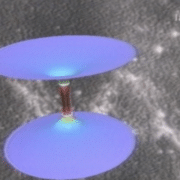
Numerical Relativity: Black Hole Spacetimes
L. Smarr, D. Hobill, D. Bernstein, D. Cox, and R. Idaszak, SIGGRAPH Video Review: Visualization State of the Art, 49, (1989).
 publication
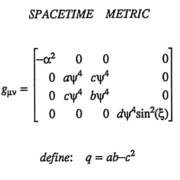
Shedding Light on Black Holes
Future Generation Computer Systems, 5, 225-242, 1989, (Elsevier Science Publishers B.V.: Amsterdam), with D. Hobill and D. Bernstein. (1989).
 publication
Numerically Generated Black Hole Spacetimes: Interaction with Gravitational Waves
A. Abrahams, D. Bernstein, D. Hobill, E. Seidel, and L. Smarr, Physical Review D15, 45, 3544, (1992).
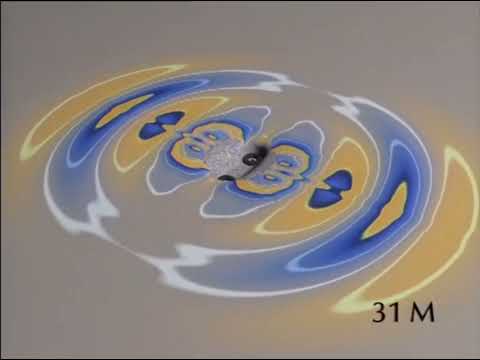 presentationvideo
The Collision of Two Black Holes – NCSA Visualization
NCSA Visualization – Peter Anninos, David Hobill, Edward Seidel, Larry Smarr, Wai-Mo Suen, and Mark Bajuk.
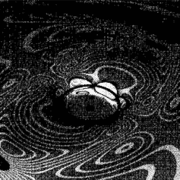 publication
Visualizing Black Hole Space-times
Anninos, P., Bajuk, M., Seidel, E., Smarr, L., & Hobill, D. (1993). Visualizing black hole space-times. IEEE Computer Graphics and Applications , 13 (1), 13-14. https://dl.acm.org/doi/abs/10.5555/160673.160676es
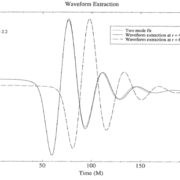 publication
The Collision of Two Black Holes
P. Anninos, D. Hobill, E. Seidel, and L. Smarr, and W.-M. Suen, Physical Review Letters, 71, 2851 (1993).
 publication
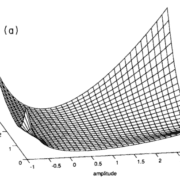
Initial Data for the Black Hole plus Brill Wave Spacetime
D. Bernstein, D. Hobill, E. Seidel and L. Smarr. Physical Review D15, 50, 3760, (1994).
 publication
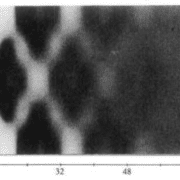
Dynamics of Black Hole Apparent Horizons
Peter Anninos, David Bernstein, Steven R. Brandt, David Hobill, Edward Seidel, and Larry Smarr, Physical Review D15, 50, 3801. (1994).
 publication
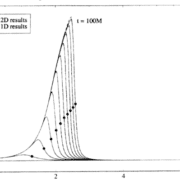
Numerically Generated Axisymmetric Black Hole Spacetimes: Numerical Methods and Code Tests
D. Bernstein, D. Hobill, E. Seidel, L. Smarr, and J. Towns, Physical Review D15, 50, 5000, (1994).
 publication
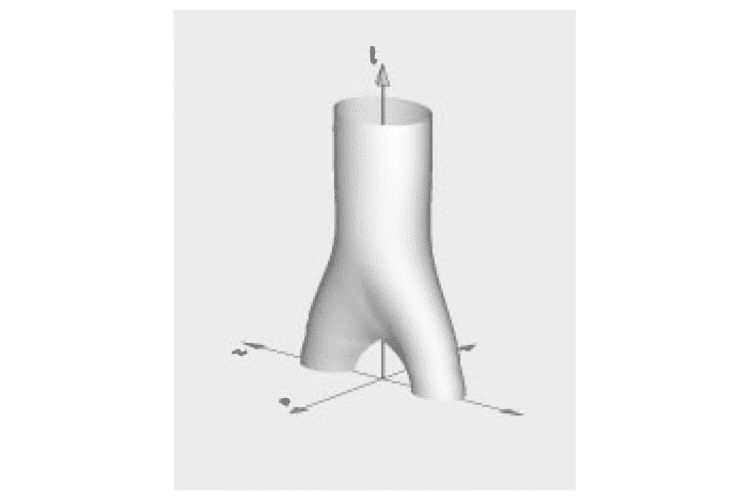
Event Horizons Of Numerical Black Holes
Peter Anninos, David Bernstein, Steve Brandt, Joseph Libson, Joan Masso, Ed Seidel, Larry Smarr, and Paul Walker, Proceedings of the 7th Marcel Grossmann Meeting on General Relativity, Ed. R. Ruffini and M. Keiser, World Scientific, Singapore. (1995).
 publication
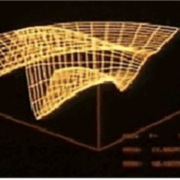
Oscillating Apparent Horizons In Numerically Generated Spacetimes
Peter Anninos, David Bernstein, Steve Brandt, David Hobill, Ed Seidel, Larry Smarr, Australian Journal of Physics, 48, 1027-43 (1995).
 publication
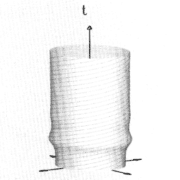
Dynamics of Apparent and Event Horizons
P. Anninos, D. Bernstein, S. Brandt, J. Libson, Joan Masso, E. Seidel, L. Smarr, W.-M. Suen, and P. Walker. Physical Review Letters, 74, 630. (1995).
 publication
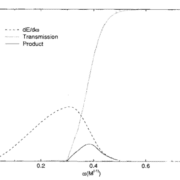
The Head-On Collision Of Two Equal Mass Black Holes
Peter Anninos, David Hobill, Edward Seidel, Larry Smarr, and Wai-Mo Suen. Physical Review D15, 52, 2044. (1995).
 publication
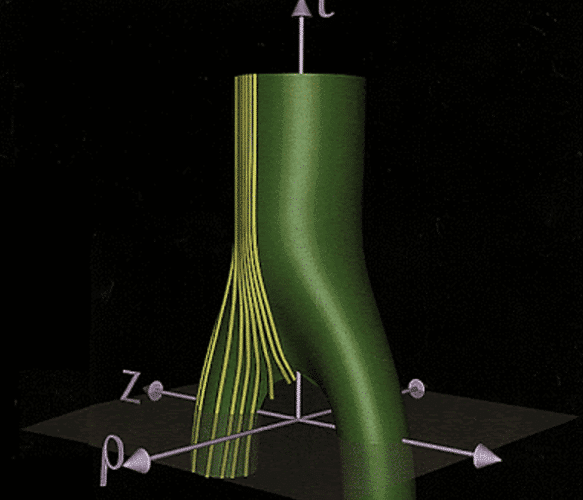
Geometry of a Black Hole Collision – Science Magazine
Richard Matzner, Edward Seidel, Stuart L. Shapiro, Larry Smarr, Wai-Mo Suen, Saul Teukolsky, Jeff Winicuor, Science 270, 941. (1995).
 publication
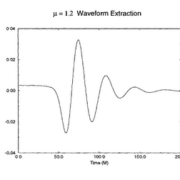
Head-on Collisions of Two Black Holes
D. W. Hobill, P. Anninos, E. Seidel, L. Smarr, W.-M. Suen, in Computational Astrophysics; 12th Kingston Meeting on Theoretical Astrophysics; ASP Conference Series #123, edited by D. A. Clarke and M. J. West., p. 314 (1997).
 publication
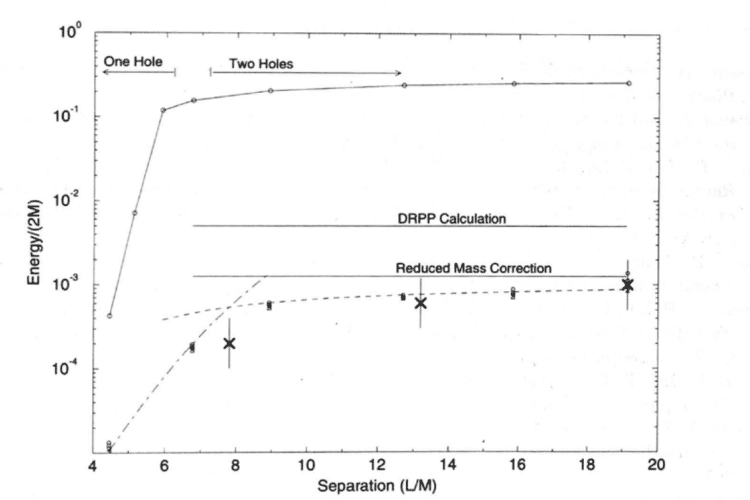
When Black Holes Collide
Peter Anninos, David Hobill, Edward Seidel, Larry Smarr, and Wai-Mo Suen, in Proceedings of the Sixth Canadian Conference on General Relativity and Relativistic Astrophysics, Fields Institute Communications (1997).
 publication
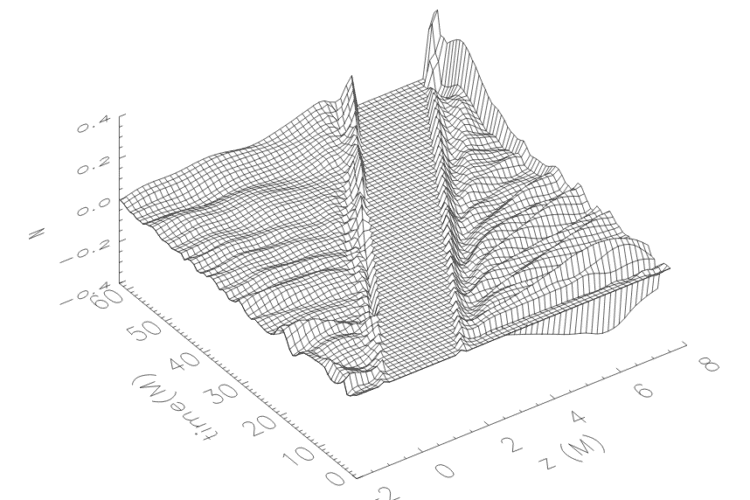
Boosted three-dimensional black-hole evolutions with singularity excision
G. B. Cook, M. F. Huq, S. A. Klasky, M. A. Scheel, A. M. Abrahams, A. Anderson, P. Anninos, T. W. Baumgarte, N. T. Bishop, S. R. Brandt, J. C. Browne, K. Camarda, M. W. Choptuik, C. R. Evans , L. S. Finni G. C. Fox, R. G´omez, T. Haupt, L. E. Kidder, P. Laguna, W. Landry, L. Lehner, J. Lenaghan , R. L. Marsa, J. Masso, R. A. Matzner, S. Mitra, P. Papadopoulos, M. Parashar, L. Rezzolla, M. E. Rupright , F. Saied, P. E. Saylor, E. Seidel, S. L. Shapiro, D. Shoemaker, L. Smarr, W. M. Suen , B. Szil´agyi, S. A. Teukolsky, Physical Review Letters, 80, 2512-2516 (1998).
 publication
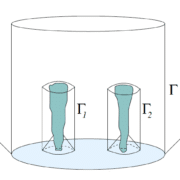
Stable characteristic evolution of generic 3-dimensional single-black-hole spacetimes
R. Gomez, L. Lehner, R. L. Marsa, J. Winicour, A. M. Abrahams, A. Anderson, P. Anninos, T. W. Baumgarte, N. T. Bishop, S. R. Brandt, J. C. Browne, K. Camarda , M. W. Choptuik, R. R. Correl, G. B. Cook, C. R. Evans, L. S. Finn, G. C. Fox, T. Haupt, M. F. Huq, L. E. Kidder, S. A. Klasky, P. Laguna, W. Landry, J. Lenaghan, J. Masso, R. A. Matzner, S. Mitra, P. Papadopoulos, M. Parashar, L. Rezzolla, M. E. Rupright, F. Saied, P. E. Saylor, M. A. Scheel, E. Seidel, S. L. Shapiro, D. Shoemaker, L. Smarr, B. Szilagyi, S. A. Teukolsky, M. H. P. M. van Putten, P. Walker, J. W. York Jr., Physical Review Letters, 80, 3915-3918 (1998).
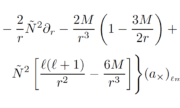 publication
Gravitational Wave Extraction and Outer Boundary Conditions by Perturbative Matching
A. M. Abrahams, L. Rezzolla, M. E. Rupright, A. Anderson, P. Anninos, T. W. Baumgarte, N. T. Bishop, S. R. Brandt, J. C. Browne, K. Camarda , M. W. Choptuik, G. B. Cook, C. R. Evans, L. S. Finn, G. Fox, R. G’omez, T. Haupt, M. F. Huq, L. E. Kidder, S. Klasky, P. Laguna , W. Landry, L. Lehner, J. Lenaghan, R. L. Marsa, J. Masso, R. A. Matzner, S. Mitra, P. Papadopoulos, M. Parashar, F. Saied, P. E. Saylor, M. A. Scheel, E. Seidel, S. L. Shapiro, D. Shoemaker, L. Smarr, B. Szil’agyi, S. A. Teukolsky, M. H. P. M. van Putten, P. Walker, J. Winicour, J. W. York Jr., Physical Review Letters, 80, 1812 (1998).
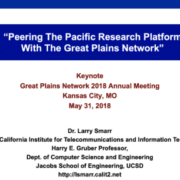 presentation
The First 50 Years of the Two Black Hole Collision Problem: 1935 to 1985
Invited Talk at the UCSB Institute of Theoretical Physics Miniprogram on Colliding Black Holes: Mathematical Issues in Numerical Relativity, Santa Barbara, CA January 10, 2000
▶ View slidesOpen PDF in a new tab ↗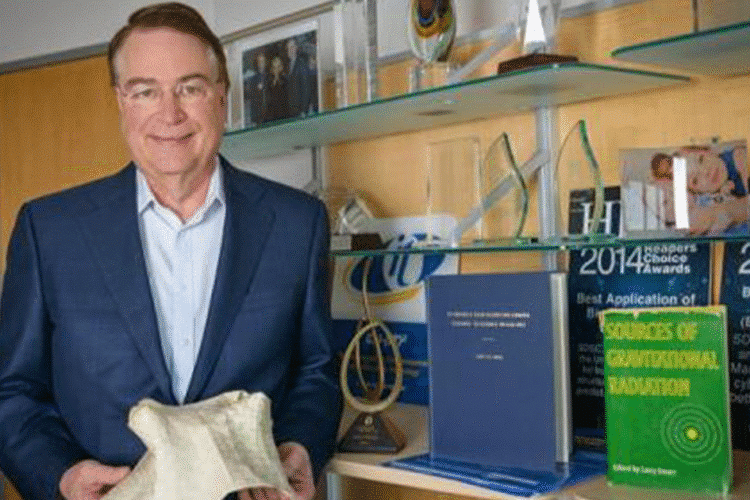 media
Gravitational Wave Discovery Echoes CSE Professor’s 1975 Dissertation – CSE News
In his doctoral dissertation at the University of Texas, Austin in 1975, CSE professor Larry Smarr developed a computational method for solving Albert Einstein’s equations of general relativity.
 media
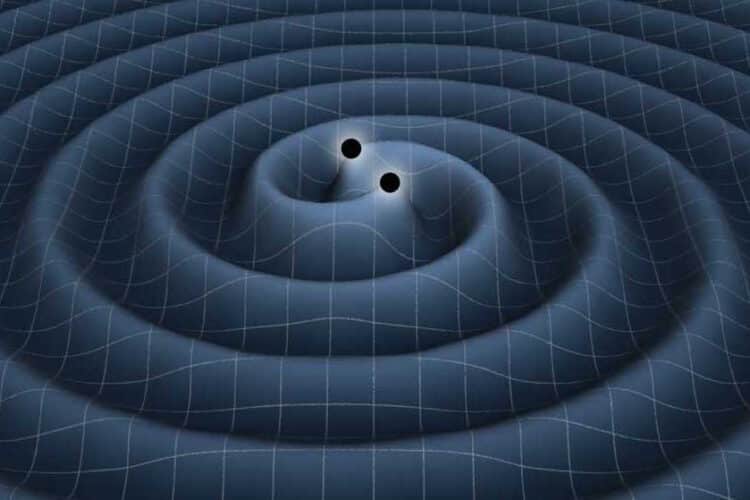
Gravitational Waves Detected! Historic LIGO Success Strikes Chord with Larry Smarr – HPC Wire
The event that created these particular gravitational waves – the spiraling of two black holes into each other about 1.3 billion light-years away (or 1.3 billion years ago)- was the most energetic event ever detected.
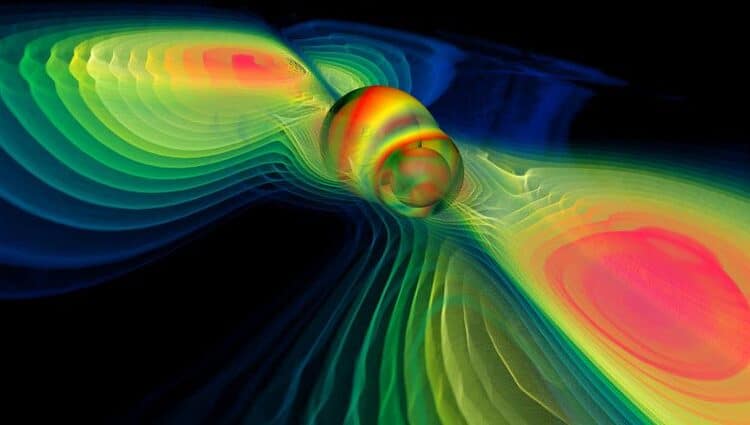 media
Gravitational Waves Detected 100 Years After Einstein’s Prediction – HPC Wire
Larry Smarr’s Ph.D. dissertation presaged the announcement of the first detection of gravitational waves created by a merger of two black holes 1.3 billion light-years away.
 media
Leggo my LIGO – Smile Politely
After LIGO detected gravitational waves a few months ago (detected in September 2015 but announced in February 2016), LIGO and gravitational waves became almost household words. However, did you know that the revolutionary observations couldn’t have been made without the help of the U of I?
 presentation
The Pre-History of the Two Black Hole Collision Problem
Invited Talk. History of Numerical Relativity Session. American Physical Society. Columbus, OH. April 15, 2018
▶ View slidesOpen PDF in a new tab ↗