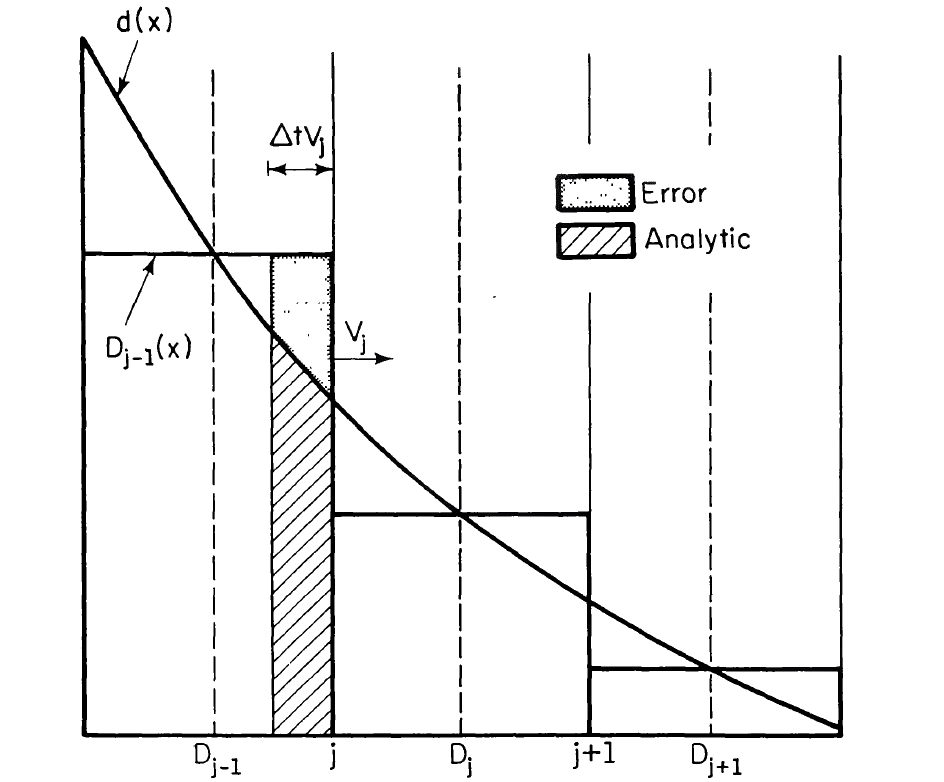
Gravitational waveforms, detector science, and gravitational-radiation sources.
 publication
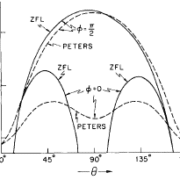
Gravitational radiation from distant encounters and from head-on collisions of black holes: The zero-frequency limit
L. Smarr, Physical Review D15, 2069-2077 (1977).
 publication
Our Elastic Spacetime: Black Holes And Gravitational Waves
L. Smarr and W. H. Press American Scientist, 66, 72-79 (1978).
 publication
Sources Of Gravitational Radiation, Ed.
Edited by L. Smarr (Cambridge University Press) (1979).
 publication
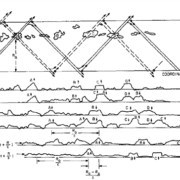
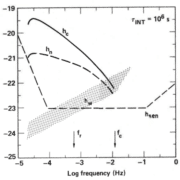
Gravitational waves and red shifts: A space experiment for testing relativistic gravity using multiple time-correlated radio signals
Gen. Rel. and Grav., 15, 129-163, with R. F. C. Vessot, C. A. Lundquist, R. Decker and T. Piran. (1983).
 publication
Degenerate Dwarf Binaries as Promising, Detectable Sources of Gravitational Radiation
C. R. Evans, I. Iben, Jr., and L. Smarr, Astrophysical Journal, 323, 129-139 (1987).
 media
Gravitational Waves Detected! Historic LIGO Success Strikes Chord with Larry Smarr – HPC Wire
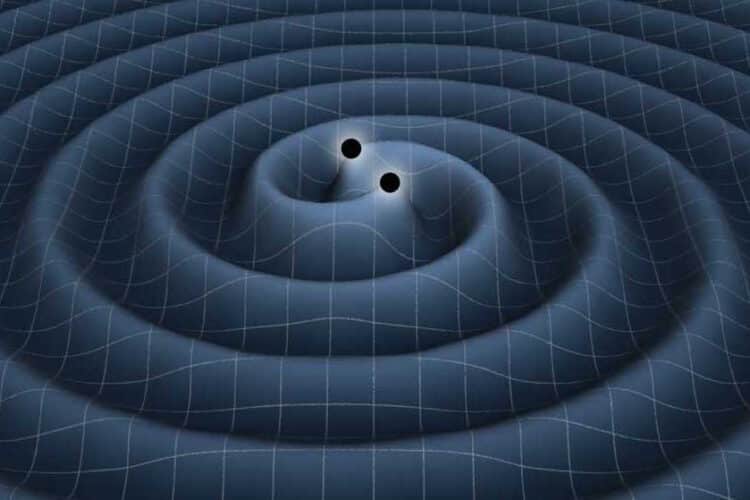
The event that created these particular gravitational waves – the spiraling of two black holes into each other about 1.3 billion light-years away (or 1.3 billion years ago)- was the most energetic event ever detected.
 media
Gravitational Waves Detected 100 Years After Einstein’s Prediction – HPC Wire
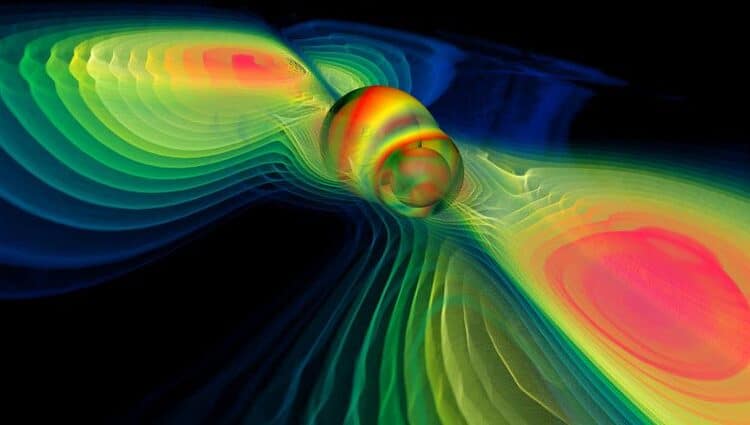
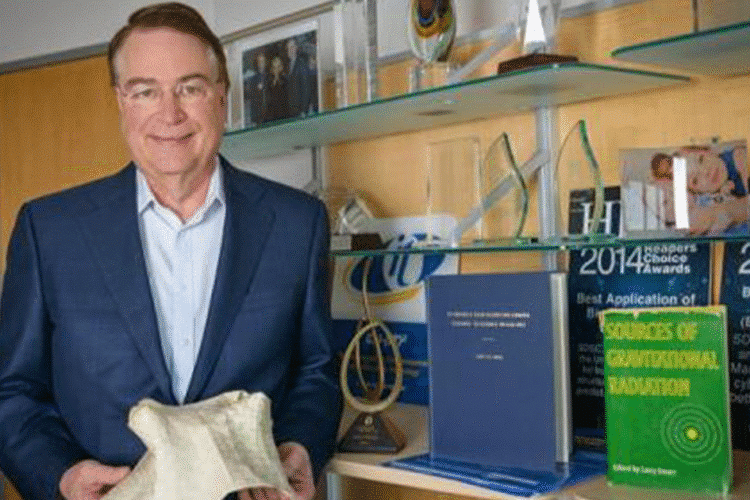
Larry Smarr’s Ph.D. dissertation presaged the announcement of the first detection of gravitational waves created by a merger of two black holes 1.3 billion light-years away.
 media
Gravitational Wave Discovery Echoes CSE Professor’s 1975 Dissertation – CSE News
In his doctoral dissertation at the University of Texas, Austin in 1975, CSE professor Larry Smarr developed a computational method for solving Albert Einstein’s equations of general relativity.