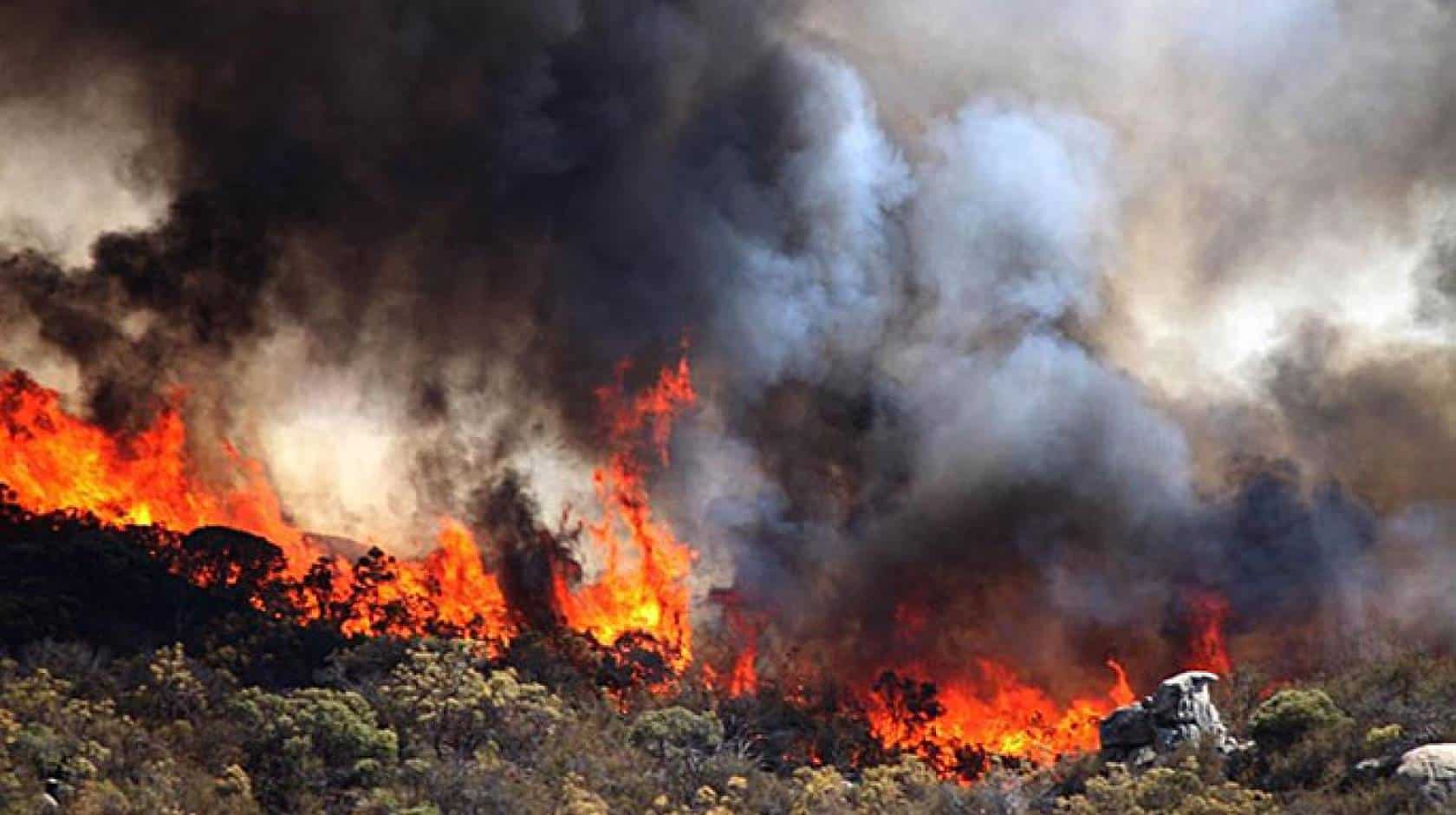
WIFIRE, ocean-floor and coral-reef observing platforms, and Community Environmental Observing Systems.
 presentation
Toward a Global Interactive Earth Observing Cyberinfrastructure
Invited Talk to the 21st International Conference on Interactive Information Processing Systems (IIPS) for Meteorology, Oceanography, and Hydrology Held at the 85th AMS Annual Meeting San Diego, CA
▶ View slidesOpen PDF in a new tab ↗- presentation
Cyberinfrastructure for Advanced Marine Microbial Ecology Research and Analysis (CAMERA)
Invited Keynote Annual Meeting CENIC 2006 Oakland, CA
▶ View slidesOpen PDF in a new tab ↗ - presentation
Building a Community Cyberinfrastructure to Support Marine Microbial Ecology Metagenomics
Invited Talk Metagenomics 2006 La Jolla, CA
▶ View slidesOpen PDF in a new tab ↗ - presentation
Cyberinfrastructure for Advanced Marine Microbial Ecology Research and Analysis (CAMERA)
Invited Talk CONNECT Board Meeting La Jolla, CA
▶ View slidesOpen PDF in a new tab ↗ - presentation
Creating a Cyberinfrastructure for Advanced Marine Microbial Ecology Research and Analysis (CAMERA) – Taking Metagenomics to Light Speed
Invited Talk ONR Review Scripps Institution of Oceanography, UCSD La Jolla, CA
▶ View slidesOpen PDF in a new tab ↗ - presentation
Cyberinfrastructure for Advanced Marine Microbial Ecology Research and Analysis (CAMERA)
Invited Talk CONNECT Investment Community Meeting Calit2@UCSD La Jolla, CA
▶ View slidesOpen PDF in a new tab ↗ - presentation
Building a Community Cyberinfrastructure to Support Marine Microbial Ecology Metagenomics
Invited Talk 2006 Synthetic Biology Symposium Aliso Creek Inn Laguna Beach, CA
▶ View slidesOpen PDF in a new tab ↗ - presentation
Building a Community Cyberinfrastructure to Support Marine Microbial Ecology Metagenomics
Invited Talk Center for Earth Observations and Applications Advisory Committee La Jolla, CA
▶ View slidesOpen PDF in a new tab ↗ - presentation
Calit2 – CSE’s Living Laboratory for Applications
Guest Lecture UCSD CSE 91 – Perspectives in Computer Science (Fall 07) La Jolla, CA
▶ View slidesOpen PDF in a new tab ↗ - presentation
Calit2’s UCSD Building a “Living Laboratory” For The Future
Overview Gilbane Higher Education Facilities Forum La Jolla, CA
▶ View slidesOpen PDF in a new tab ↗ - presentation
Wildfires, Hydrology, and Microbes: Possible Areas for Collaboration with Calit2
Invited Speaker Desert Research Institute Reno, NV
▶ View slidesOpen PDF in a new tab ↗ - presentation
Toward a Global Coral Reef Observatory
Kickoff Talk Coral Reef Environmental Observatory Network (CREON) Meeting Kenting, Taiwan
▶ View slidesOpen PDF in a new tab ↗ - presentation
The FiRe CTO Design Challenge: Wildfire Technology
CTO Challenge Team presentation FiRe Conference San Diego, CA
▶ View slidesOpen PDF in a new tab ↗ - presentation
Calit2 – CSE’s Living Laboratory for Applications
UCSD CSE 91 – Perspectives in Computer Science (Spring 2008) Calit2@UCSD La Jolla, CA
▶ View slidesOpen PDF in a new tab ↗ - presentation
Creating a Community Cyberinfrastructure for Advanced Marine Microbial Ecology Research and Analysis (a.k.a. CAMERA)
Invited Talk Honoring David Kingsbury Gordon and Betty Moore Foundation Palo Alto, CA
▶ View slidesOpen PDF in a new tab ↗  publication
Campuses as Living Laboratories for the Greener Future
B. St. Arnaud, L. Smarr, J. Sheehan, and T. DeFanti, [invited article] EDUCAUSE Review, 44, 14-33 (2009)
 grant
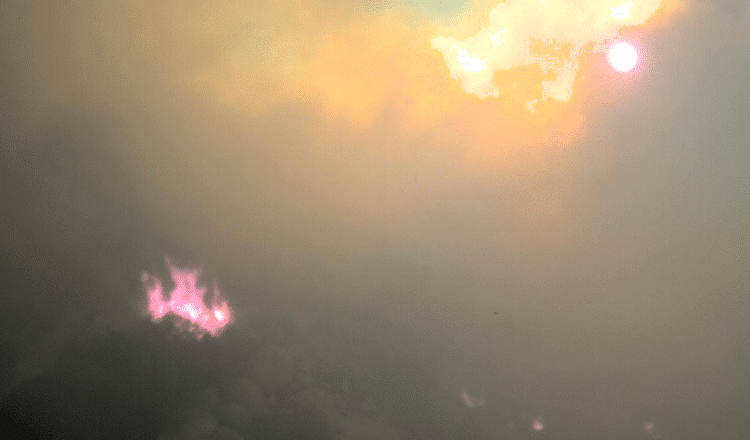
EAGER: Wildfire Modeling and Prevention Initiative: Developing a Technical Framework for Integrating Research with Public Policy Decision Support
The need for descriptive and predictive simulation tools to support wildfire prevention, or suppression during future wildfire events, is becoming critical.
 media
Wildfire Modeling and Prevention – Newswise
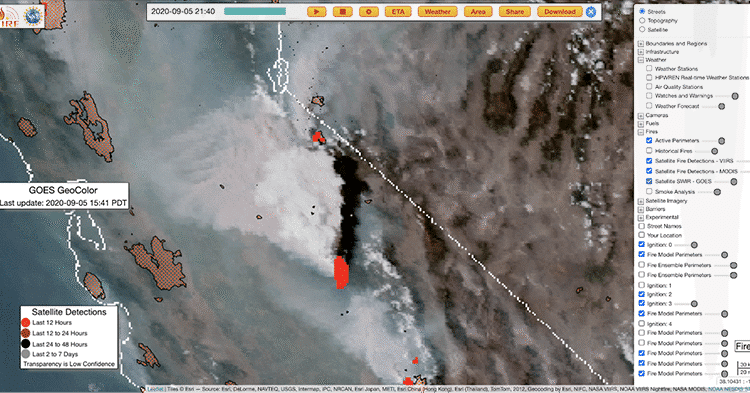
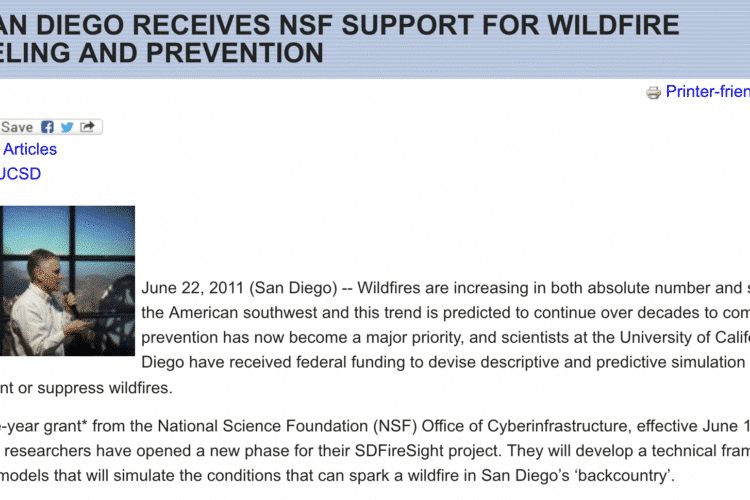
With a one-year grant* from the National Science Foundation (NSF) Office of Cyberinfrastructure, effective June 1, the UC San Diego researchers have opened a new phase for their SDFireSight project. They will develop a technical framework and computer models that will simulate the conditions that can spark a wildfire in San Diego’s ‘backcountry’.
 media
UC San Diego Recieves NSF Support for Wildfire Modeling and Prevention – East County Magazine
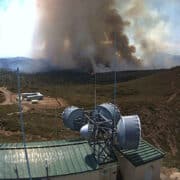
Wildfires are increasing in both absolute number and severity in the American southwest and this trend is predicted to continue over decades to come. Wildfire prevention has now become a major priority, and scientists at the University of California, San Diego have received federal funding to devise descriptive and predictive simulation tools to help prevent or suppress wildfires.
 media
UC San Diego, UMD Researchers to Build ‘WIFIRE’ Cyberinfrastructure – UC San Diego Today
Three research organizations at the University of California, San Diego, have been awarded a multi-year National Science Foundation (NSF) grant to build an end-to-end cyberinfrastructure to perform real-time data-driven assessment, simulation, prediction, and visualization of wildfire behavior.
 grant
WIFIRE: A Scalable Data-Driven Monitoring, Dynamic Prediction and Resilience Cyberinfrastructure for Wildfires
The University of California at San Diego is awarded a grant to build an end-to-end cyberinfrastructure, called WIFIRE, for real-time and data-driven simulation, prediction and visualization of wildfire behavior.
- presentation
How Studying Astrophysics and Coral Reefs Enabled Me to Become an Empowered, Engaged Patient
Invited Talk FutureMed at the Hotel Del Coronado, CA
▶ View slidesOpen PDF in a new tab ↗ 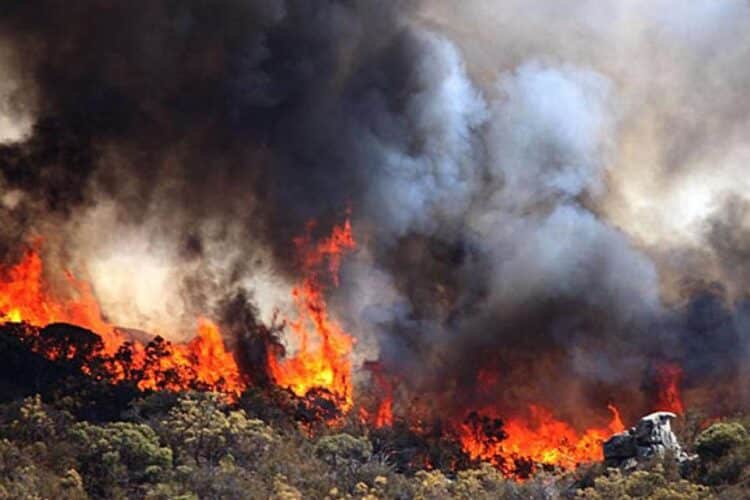 media
WIFIRE project helps firefighters get a jump on wildfires – UC News
Now, thanks to a multi-year, $2.65 million grant from the National Science Foundation (NSF), the University of California San Diego, and the University of Maryland have been building a cyberinfrastructure to better monitor, predict, and mitigate wildfires in the future.
 media
Firefighters get high tech to douse wildfires – PBS News
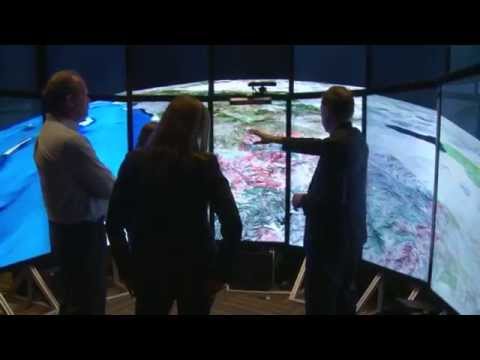
University of California San Diego computer scientists stitch together information from weather sensors and satellite images to predict where wildfires are moving in real time. All of the images and data is fed into a supercomputer and creates a network of real-time wildfire information. Their cyber infrastructure system, called WIFIRE, analyzes the information to forecast where the fire will move while it is burning.
▶ Video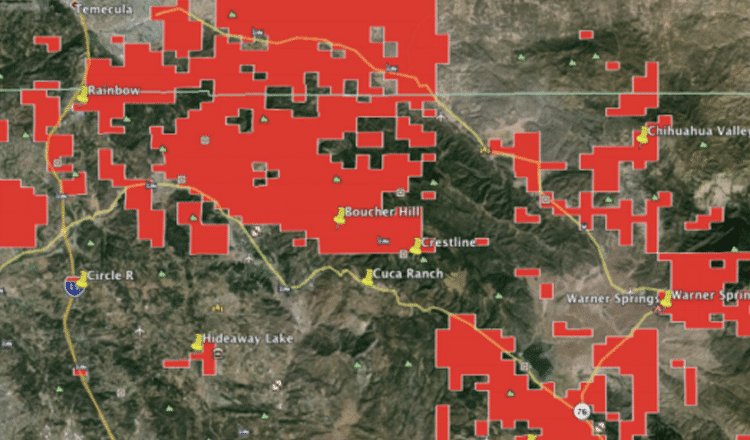 publication
Towards an Integrated Cyberinfrastructure for Scalable Data-driven Monitoring, Dynamic Prediction and Resilience of Wildfires
Ilkay Altintas, Jessica Block, Raymond de Callafon, Daniel Crawl, Charles Cowart, Amarnath Gupta, Mai Nguyen, Hans-Werner Braun, Jurgen Schulze, Michael Gollner, Arnaud Trouve, Larry Smarr. Procedia Computer Science, vol. 51, pp 1633-1642. (2015).
 media
Technology Projects to Combat California Wildfires Are Recognized with CENIC Innovation Award
In recognition of work to bring advanced IT and telecommunications to the fight to contain California wildfires, the WIFIRE, HPWREN, and AlertTahoe projects have been selected as recipients of the CENIC 2018 Innovations in Networking Award for Experimental Applications.
 presentation
The Transformational Nature of NSF Long-Term Funding on Santa Ana Wildfires in Southern California
Invited Presentation with Ilkay Altintas To the Council on Competitiveness SDSC, UC San Diego March 8, 2019
▶ View slidesOpen PDF in a new tab ↗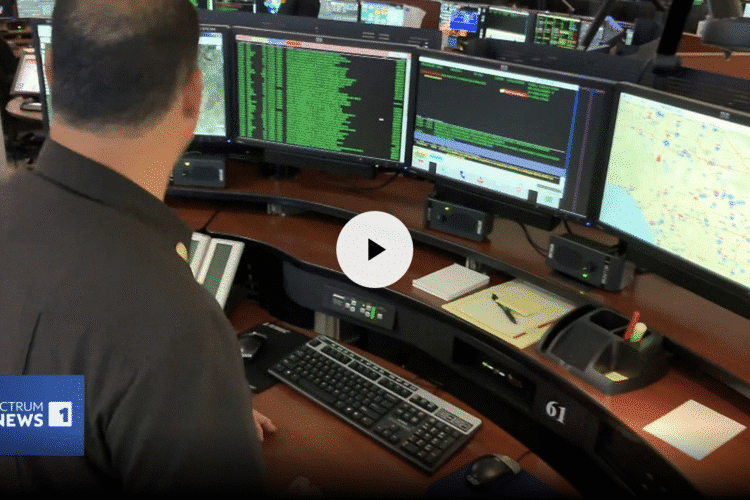 media
Firefighters Look to Supercomputers to Combat Wildfires – Spectrum News 1
“Just to imagine what kind of computations are taking place here. It’s mind-blowing,” Ilkay Altintas, Chief Data Science Officer at the San Diego Supercomputer Center, told Spectrum News 1.
 media
WIFIRE: Technology to Predict and Prevent the Spread of Wildfires
Researchers at UC San Diego are working on cutting edge technology to combat the constant threat of wildfires in California.
▶ Video- media
Professor de Callafon helps build cyber-infrastructure to aid wildfire hazard assessment and response – MAE News
The system will integrate networked observations such as heterogeneous satellite data and real-time remote sensor data, with computational techniques in signal processing, visualization, modeling, and data assimilation to provide a scalable method to monitor such phenomena as weather patterns that can help predict a wildfire’s rate of spread.